
Uneven AI Language Performance Is Forcing Enterprises to Rethink Single-Model Deployments
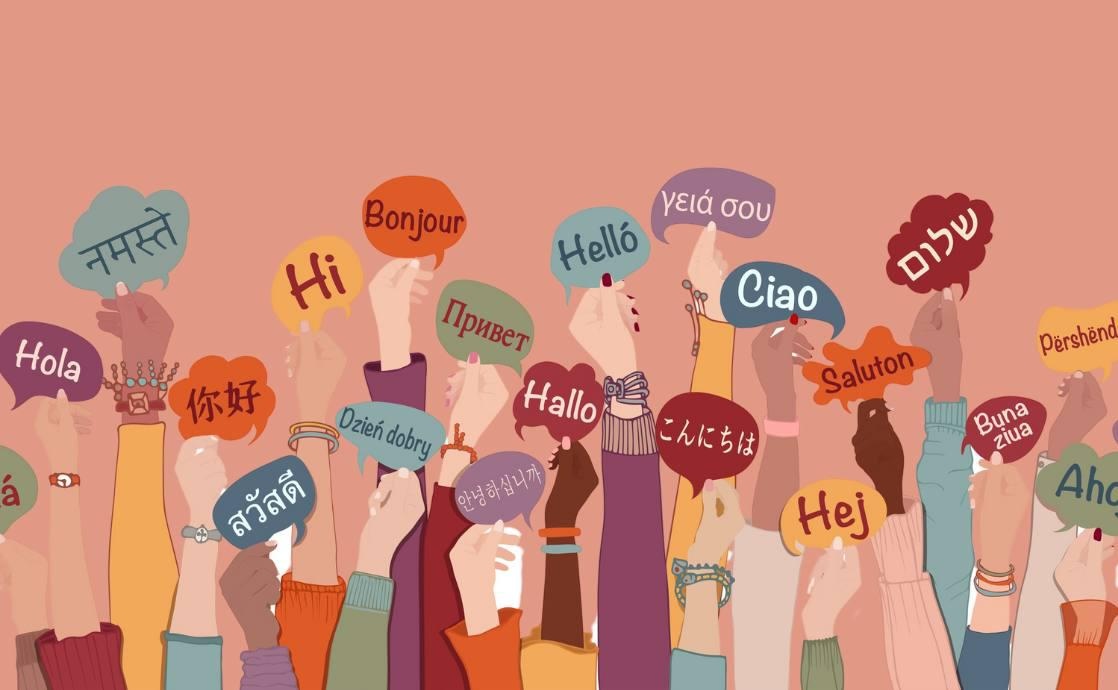
Most enterprise AI rollouts are still designed around a quiet assumption: that a model which performs well in English will perform roughly as well everywhere else. That assumption doesn't hold, and the gap is wide enough to affect real business outcomes — cost, accuracy, and who your product actually serves well.
The first issue is proficiency itself. Large language models are trained on datasets that skew heavily toward English and a handful of other high-resource languages. Performance drops measurably outside that set. A recent Oracle AI study found that even with retrieval-augmented generation in place, accuracy fell by as much as 29% in non-English languages compared to English on the same tasks. Forrester has made a similar point more bluntly: model safeguards and quality don't reliably carry over past English, and the drop is steepest in exactly the low-resource languages tied to the fastest-growing markets.
The second issue is cost, and it's less visible because it's structural rather than a line item anyone reviews. Tokenizers — the layer that breaks text into the units a model actually processes — were built around English and Latin-script text. The same sentence in another language, especially one with a non-Latin script, can take far more tokens to represent. A widely cited analysis by researchers Jennifer Haase and Sebastian Pokutta put it plainly: the same semantic content can require anywhere from 1.3x to more than 10x as many tokens depending on the language-tokenizer pairing, and users of poorly served languages pay more for a smaller usable context window at the same time — what the researchers call double jeopardy. A separate breakdown of API pricing across language families found close to a 5x cost increase for mid-resourced Indic languages compared to English for identical content.
Put those two together and you get a system that is quietly worse and quietly more expensive for a large share of the global market, without a single dashboard flagging it. That's the part enterprises should sit with. If your product handles English fine, the failure mode isn't a broken feature — it's a slow accumulation of bad answers, higher bills, and lower usage in every market that isn't English-first, discovered only once it shows up in churn or support tickets.
None of this means enterprises need to abandon large general-purpose models. It means deployment decisions have to account for language the same way they already account for latency or uptime.
Test in the languages you actually serve, not just the ones your team happens to read. Benchmarking a model in English and assuming the results transfer is the single most common mistake here. Argos Multilingual's research on 2026 enterprise readiness makes the point directly: the companies getting this right are testing models and evaluation criteria in target-market languages from the start, rather than treating English as the source of truth and patching translations on afterward.
Match the tool to the language pair, not the other way around. The emerging pattern across the industry is orchestration rather than commitment to a single model for every language. Rather than picking one engine and accepting its weaknesses everywhere, route content by language pair and risk level — a general-purpose model for high-resource languages where it performs well, a specialized or fine-tuned option where the gap is largest. This costs more to set up and considerably less to run badly.
Price and budget by language, not by user count. Because token cost varies so widely by language — in some documented cases by an order of magnitude for the same content — a flat per-seat or per-query cost model will systematically misprice markets you're trying to grow into. Enterprises expanding into South Asia, Southeast Asia, or the Middle East should expect non-English token costs to run several times higher than English for equivalent volume, and budget accordingly rather than being surprised by it later.
Treat multilingual quality as a compliance issue, not just a UX one. Where AI is used in hiring, healthcare, legal, or public-facing decisions, uneven language performance isn't just an experience gap — it's a fairness and accuracy gap that regulators are increasingly positioned to scrutinize. Building language testing into procurement and deployment review now is considerably cheaper than retrofitting it once a regulator asks for it.
The companies that will get the most out of AI at global scale aren't the ones with access to the best model. They're the ones who stopped assuming "the model works" means "the model works everywhere," and built their evaluation, routing, and budgeting around the fact that it doesn't — yet.