What is a quarterly performance review?

An ideal quarterly performance review goes beyond merely evaluating performance; it fosters a two-way dialogue between managers and team members. The process should be structured yet conversational, focusing on recent goals, measurable outcomes, challenges encountered, and areas for growth. The review should blend data-driven insights, such as project metrics and KPIs, with qualitative feedback. It should also provide an opportunity to set or adjust goals for the upcoming quarter. Most importantly, the review should promote transparency, celebrate achievements, and offer actionable guidance, ensuring that employees feel recognized, supported, and aligned with the overall organizational vision.

Understanding quarterly performance reviews and why they matter

Quarterly performance reviews are a great way to engage regularly, help catch roadblocks early, and course correct in real time, so goals stay aligned and progress doesn’t stall. They allow for:

  • Timely reflections

    Tackle challenges before they escalate.

  • Goal realignment

    Shift focus to what truly matters, based on business requirements.

  • Celebration and encouragement

    Acknowledge achievements while exploring growth areas.

These reviews can also reduce anxiety, turning feedback into a regular, supportive practice by making feedback a habit, not a surprise, that in turn builds confidence.

Quarterly performance reviews vs. annual reviews: Which works better for employee growth?

From economic volatility to evolving employee expectations, today’s unpredictable business landscape has pushed companies to rethink long-standing systems, especially how performance is evaluated—and these shifts are affecting every part of the organization. Annual reviews often fall short in keeping teams aligned, addressing issues early, or supporting continuous growth. In contrast, quarterly performance reviews offer a more agile and relevant approach.

Let's look at some of the benefits of quarterly performance reviews over annual ones:

  • Timely feedback & ongoing alignment

    helps employees get quicker inputs and in-depth feedback while projects are still fresh. This makes it easier to adjust behaviors and improve performance before habits set in and ensure goals stay relevant to the business.

  • Reduced recency bias

    With quarterly reviews, performance isn’t judged based on just the last few weeks before an annual cycle. There’s a more balanced view across the year.

  • Frequent mentoring opportunity

    Regular and shorter feedback loops create space for consistent coaching, learning opportunities, and recognition.

  • Sustainable retention model

    Employees feel seen, heard, and supported, acting as key drivers for satisfaction and long-term retention.

    A modern approach that blends quarterly reviews or reflections with annual incentive corrections offers a supportive environment of regular acknowledgement of efforts and achievements, continuous learning opportunities, and a holistic understanding of each employee's professional journey.

A step-by-step guide to structuring effective quarterly reviews for managers

  • 1

    Step 1: Review your employee's past performance.

    Make sure to thoroughly and carefully review your employees' past performance over the quarter to ensure the conversation has enough substance and is fruitful for both sides. An easy tip would be to take notes regularly, helping you get a holistic understanding of employee performance.

  • 2

    Step 2: Ask for peer-to-peer reviews

    This typically involves allowing coworkers to evaluate each other. If done well, it can create transparency, offer different perspectives, reduce bias, and foster a culture of open and constructive communication. This process can strengthen the bond among team members and support timely interventions.

  • 3

    Step 3: Give and encourage constructive feedback

    Have an open dialogue that's honest but thoughtful. Keep it specific and point towards solution-oriented conversations. Be open to feedback and document the feedback in writing so you can assess and work with them on it.

  • 4

    Step 4: Jot down what the employee says

    It’s important to listen carefully to your employee. Keep an open mind, even if you need time to evaluate their points. Take a moment to pause before responding and communicate your thoughts objectively.

Ready-to-use quarterly performance review template for managers and HR teams

Looking for a way to manage all your employees' performance details in one place? A good quarterly performance review template can ensure you stay organized and efficient.

Let's look at some of the tables that we've created here:

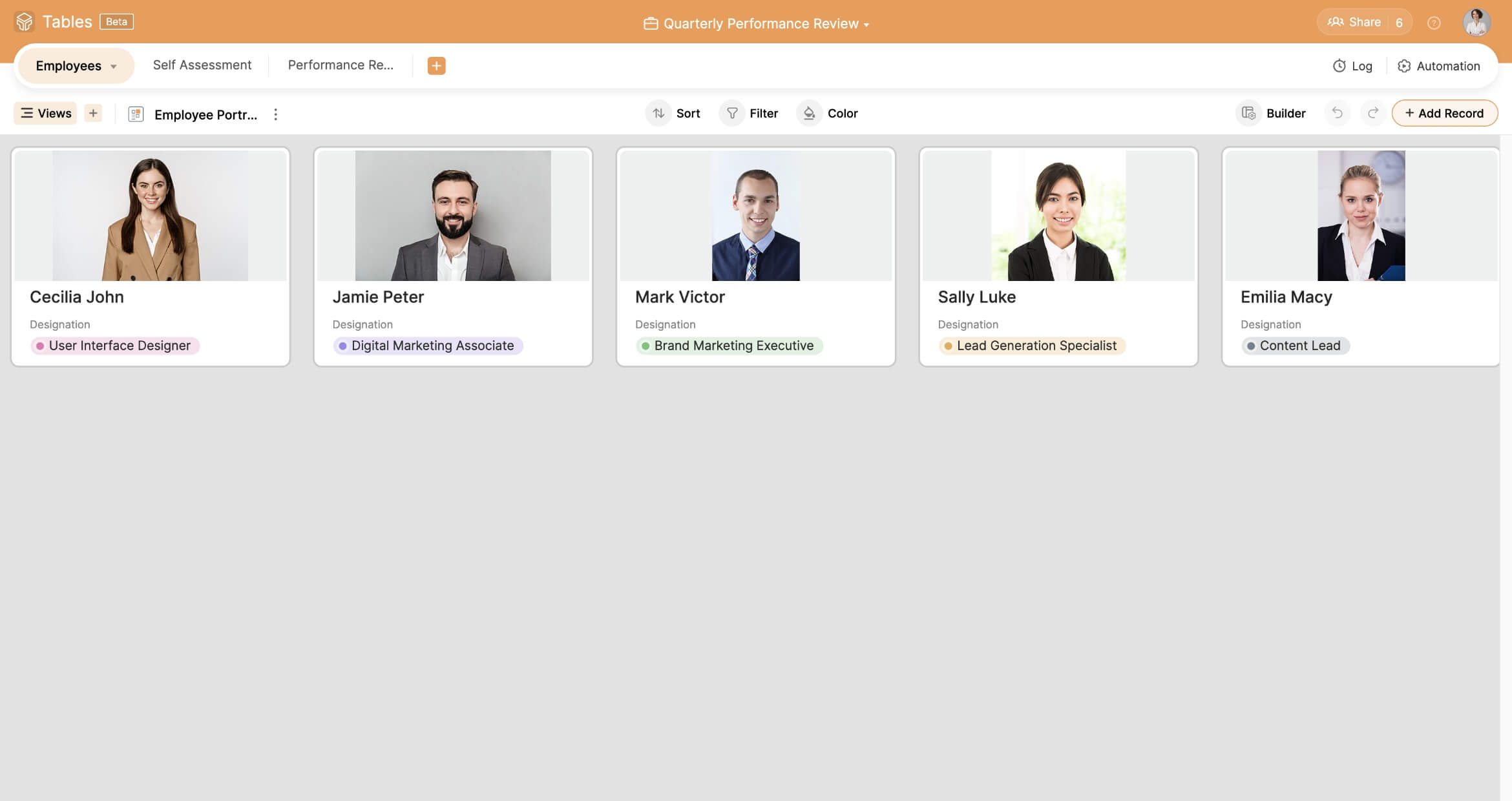
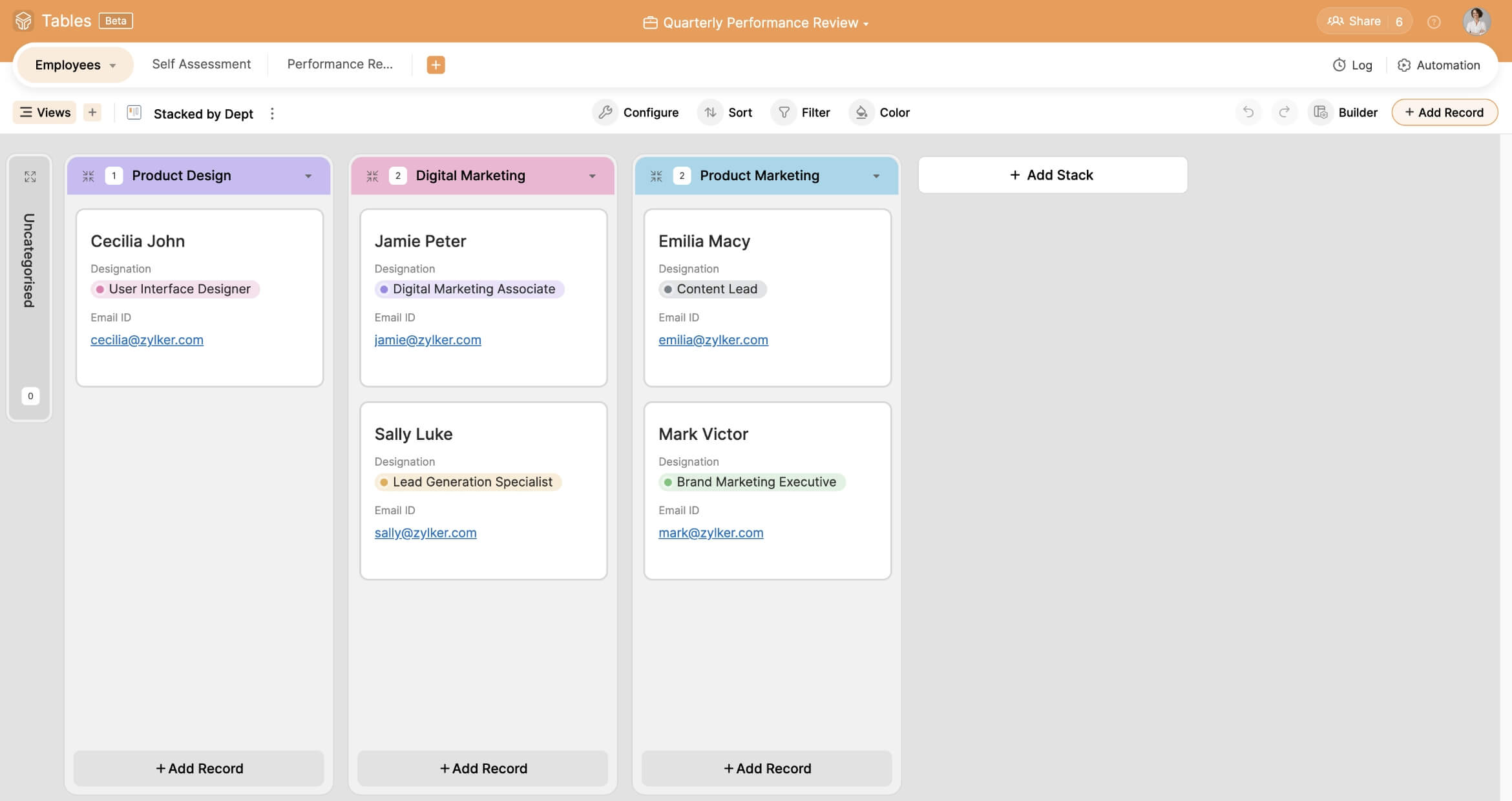
  • Employees

    This serves as your employee database, providing all necessary information in one place.

  • Self Assessment

    Collecting honest self assessments during performance reviews can be challenging, especially without guaranteed privacy. With the Form View feature in Zoho Tables, HR teams can share self-assessment forms that employees complete privately, ensuring confidentiality. This organized approach allows managers to gather responses in one place while enabling employees to reflect openly in a streamlined and structured manner.

  • Performance Review

    This serves as a key reference table outlining the main metrics for evaluating employee performance, such as attitude towards work, team play, initiatives, execution, KPIs, communication skills, culture fit, and more. With these, you can recognize achievements, identify areas of improvement, and set clear goals for future development.

  • Leads

    This serves as your dedicated lead database that's linked to your Reportee's table, which directly creates a relationship of who is assigned to whom, providing all the necessary information in one place.

  • Development & Training Needs

    Once you've identified your employees' strengths and weaknesses, recommend targeted training and development programs that provide upskilling opportunities and improve overall performance.

Zoho Tables Reports

Zoho Tables Reports help you quickly turn quarterly performance data into clear, structured insights. Managers can track employee score, understand team average scores, identify development needs, and share review outcomes with the team in just a few clicks.

How to follow up after a performance evaluation for lasting impact

A quarterly performance review shouldn't just be a one-time event; it’s the starting point for continued growth. Once you've evaluated and provided the required feedback and targeted training programs, reconnect after a couple of weeks to see how things are shaping up, address any blockages, and reinforce goals. Consistent follow-ups, open feedback loops, and visible support not only strengthen accountability but also show employees that their growth genuinely matters, instilling long-term motivation, trust, and impact.

Start applying these practices today to strengthen your HR workflows and foster sustained employee growth with our ready to use template.