

- HOME
- Taxes & compliance
- State vs. Federal tax compliance: Key differences for US business owners
State vs. Federal tax compliance: Key differences for US business owners
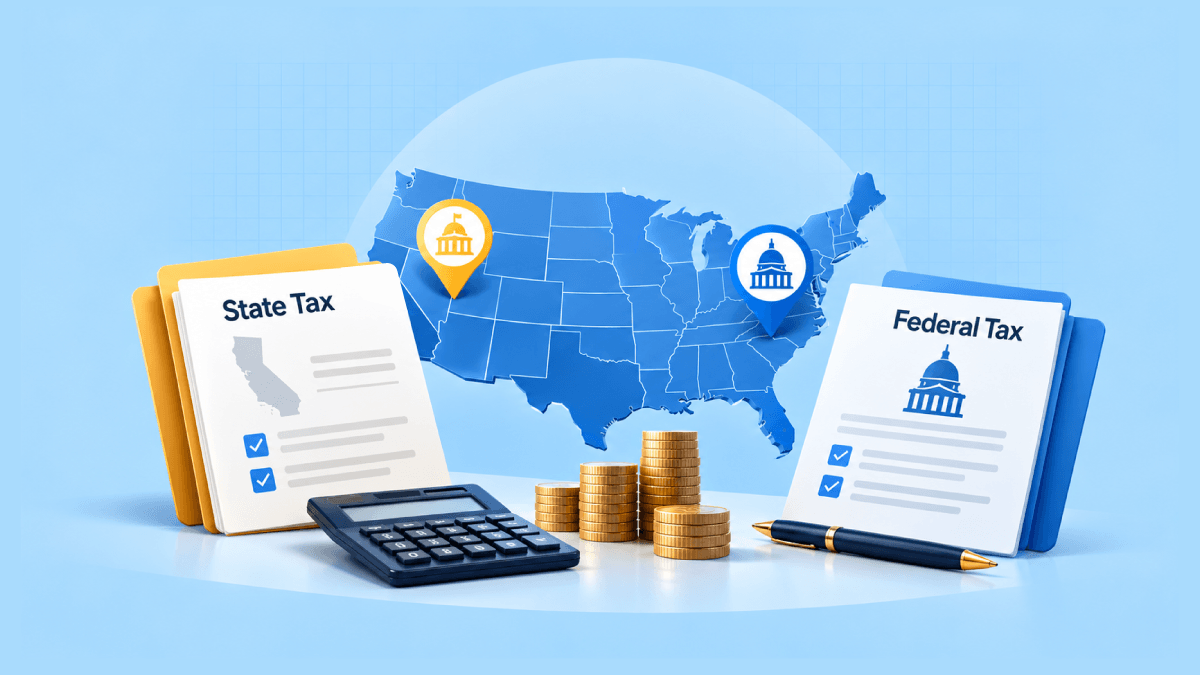
Taxes and compliance can be challenging, especially for business owners operating in the United States. With a two-tier tax system comprising federal taxes and individual state taxes, each with its own rules, rates, and filing requirements, navigating tax compliance can become complicated.
For business owners, balancing these obligations while focusing on running and growing a business can feel overwhelming. Understanding which taxes a business may owe, which government authorities administer them, and what filing, reporting, and payment obligations apply is essential to staying compliant and avoiding costly mistakes.
This article breaks down the key differences between state and federal tax compliance, explains who needs to pay which taxes, and explores how tax rates and filing requirements vary. Learn your obligations and take a more informed approach to managing your business taxes.
What are federal and state taxes?
Federal taxes
Federal taxes are imposed by the US federal government and administered by the Internal Revenue Service (IRS). It applies to both individuals and businesses, although the specific taxes owed and filing requirements depend on factors such as income, business structure, employment status, and other applicable rules.
Federal tax revenue helps fund national programs and public services, including national defense, medicare, and social security. Federal taxes follow different calculation methods, with individual federal income tax generally using a progressive rate structure.
Some of the key types of federal taxes relevant to businesses and self-employed individuals include:
Income tax – Tax on taxable income, with the applicable rules depending on the business structure.
Employment taxes – Taxes associated with employees' wages, including social security, medicare, and federal unemployment taxes.
Excise taxes – Taxes that apply to specific goods or services.
Self-employment tax – Social Security and Medicare taxes that generally apply to self-employed.
The type of business you operate determines which federal taxes you may need to pay and how you must report them. Refer to the IRS Business Guide for a more detailed look.
State taxes
State taxes are imposed and administered by individual state governments and their respective tax authorities. Unlike the federal tax system, state tax laws, rates, and filing requirements vary by state.
Depending on the state and the nature of the business, state tax obligations may include income taxes, franchise taxes, sales and use taxes, and employer-related taxes.
Certain states exempt individuals from income tax. For example, Texas, Washington, Alaska, Florida, and Nevada do not levy a broad-based individual income tax, but businesses operating in these states may still be subject to other state and local taxes.
A business' state tax obligations depend on factors such as its legal structure, location, business activities, employees, and connections to other states. Businesses operating across state lines may also need to register, file returns, or pay taxes in multiple states.
Federal vs. State tax
Comparison point | Federal tax | State tax |
Governing body | Federal government; primarily the IRS | Individual state tax authorities |
Funding purpose | National programs and public services, including national defense, medicare, and social security | Public services such as education, healthcare, transportation & infrastructure |
Geographic scope | Applies under federal tax laws across the US | Varies by state and the business’s activities and connections to that state |
Common tax types | Income tax, self-employment tax, Social Security and Medicare taxes, federal unemployment tax, and excise tax | State income or franchise taxes, sales and use taxes, and state payroll-related taxes, depending on the state |
Tax rates | Progressive structure for income tax; for businesses based on the applicable tax rules and entity structure | Vary by state, tax type, and sometimes jurisdiction/locality; some states have progressive rates, some have flat rates, few states have no personal income tax |
Filing requirements | Determined by the business structure, income, employees, and applicable federal tax obligations | Determined by state-specific rules, business activities, and registration requirements |
Deadlines | Federal deadlines apply, depending on the return and payment type | Deadlines vary by state and tax type |
Who needs to pay state and federal taxes?
Most US businesses need to pay federal taxes, however the taxes they owe along with the returns they need to file depend on their business structure, income, employees, and activities. State tax obligations vary by state and may apply in addition to federal requirements.
Understanding how your business is classified for tax purposes is an important first step in determining which taxes you need to pay and which returns you need to file.
Tax obligations by business type
Sole proprietorships, partnerships, LLCs, S corporations, and C corporations are subject to different tax rules.
Some business structures generally pass income through to their owners, while others are taxed separately. LLCs, in particular, may be taxed differently depending on their classification.
Let us consider sole proprietors here. For federal income tax purposes, the business's income and expenses are generally reported on the owner's individual tax return, rather than on a separate business income tax return. The owner may also need to pay self-employment tax and estimated taxes, depending on their earnings and circumstances.
At the state level, the owner may need to report business income on their state income tax return and comply with other applicable state and local tax requirements.
To understand how different business structures are taxed at the federal level, refer to the IRS guide for business structures.
Other factors that affect tax obligations
Beyond business structure, certain activities may create additional tax responsibilities.
Businesses with employees: Businesses that hire employees are subjected to federal payroll taxes, including federal income tax withholding and employees' Social Security and Medicare taxes. At the state level, employers may need to withhold state income tax, pay state unemployment insurance taxes, and meet other state-specific payroll requirements.
Businesses selling taxable goods or services: Businesses selling taxable products or services may need to collect and remit state and local sales taxes. Whether a product or service is taxable depends on the relevant jurisdiction's laws.
Businesses operating across multiple states: Businesses that operate in more than one state might be subjected to tax obligations in multiple jurisdictions. A physical office, employees, inventory, or sufficient economic activity in another state can trigger certain tax and registration requirements. This is what is called a nexus — a connection between a business and a state that may create tax obligations. As a result, a business may need to register with additional state tax authorities, collect and remit sales tax, or file state income or franchise tax returns in more than one state.
Since tax rules vary by jurisdiction, business owners should review the requirements applicable to their business and consult a qualified tax professional when needed.
Federal vs. State tax: Compliance requirements
Computing and filing tax returns is only part of the compliance. Before that, maintaining accurate financial records, tracking tax payments, meeting deadlines, following the reporting requirements set by federal and state tax authorities are all part of the compliance checklist. While federal tax obligations are generally governed by nationwide rules, state requirements vary depending on where a business operates and the activities it conducts.
Here are some key areas business owners should consider when managing their tax compliance.
Tax filing and reporting: Businesses need to ensure they keep track of the taxes they owe, file, and report them to both the federal and state governments. The forms and reporting requirements depend on the business structure, applicable taxes, and state regulations.
Filing deadlines and tax payments: Federal and state tax filing and payment deadlines may differ, so it is important to keep track of the applicable due dates to avoid missing them. Some businesses may also need to make estimated tax payments throughout the year. Using accounting software to track upcoming tax obligations and setting timely reminders can help businesses meet their tax requirements on time.
Financial recordkeeping: The key to preparing your tax returns and filing them on time is proper recordkeeping of your financial records such as invoices, gross receipts, expenses, payroll, and other transactions. Standardizing such practices and practicing them throughout the year can make tax preparation and return filing hassle free and help you respond to questions from tax authorities if they arise.
State-specific compliance requirements: If you are a business owner conducting operations in more than one state, in addition to federal requirements, you may need to comply with state and local tax rules. This can include sales tax, use tax, payroll and employment related taxes, business tax registrations, and other obligations, depending on the jurisdiction. While sales tax is generally collected from customers by sellers on taxable purchases, use tax may apply when taxable goods are purchased without sales tax being charged and are then used, stored, or consumed in a state.
So ensure to review the tax requirements in each state to ensure you are on the right side of compliance regulations.
Common tax compliance challenges and how to avoid them
Keeping up with both federal and state tax obligations can be challenging, especially for business owners juggling between multiple responsibilities. Here are some common tax compliance challenges and how businesses can address them.
Missing tax filing deadlines: With different deadlines and filing dates for federal and state governments, it is easy to miss filing your tax payments on time resulting in result in penalties and interest.
How to avoid it: Maintain a tax calendar that tracks federal, state, and applicable local deadlines. Set reminders in advance to give yourself enough time to prepare and submit returns.
Inaccurate or incomplete financial records: Having accurate and up-to-date financial records can make tax filing a smooth process. If you are dealing with disorganized records, missing receipts, or incorrectly recorded financial date, this can make tax preparation more difficult and increase the risk of reporting errors.
How to avoid it: Properly store all your financial documents, regularly reconcile your bank accounts, and use accounting software for digital recordkeeping, track expenses, stay audit ready, and maintain financial information.
Overlooking state-specific tax obligations: With a multi-layered tax system in the US, it is easier for businesses to assume that paying federal taxes is sufficient while overlooking the state/local taxes. It is important to keep in mind that requirements can vary depending on where the business operates and the activities it conducts.
How to avoid it: Identify the states in which your business may have tax obligations and review the relevant tax authorities' requirements regularly.
Misunderstanding business tax classification: A sole proprietor might not be subjected to the same type of tax as an S-corporation. Not knowing this may lead to incorrect reporting or missed filing obligations.
How to avoid it: Understand your business's tax classification and review the applicable IRS guidance. Consult a qualified tax professional if you are unsure which rules apply.
Failing to plan for tax payments: Without account for tax payments, businesses face the risk of not being able to cover their tax liabilities or required estimated payments, creating cash flow challenges.
How to avoid it: Include tax payments in your cash flow planning, and set aside funds for anticipated tax obligations.
Conclusion: Building a more reliable tax compliance process
As a business owner in the US, understanding the differences between federal and state taxes is essential to managing your tax obligations and avoiding unnecessary complications. From identifying the taxes that apply to your business to tracking filing deadlines, maintaining accurate financial records, and staying informed about state-specific requirements, a proactive approach can make tax management more manageable.
Leveraging the right technology can also help streamline your financial management processes. Accounting software, such as Zoho Books, can help you organize transactions, track income and expenses, generate financial reports, and maintain accurate records to support tax preparation. By combining reliable accounting practices with a clear understanding of your tax obligations, you can spend less time managing financial data and more time focusing on growing your business.
Remember that tax requirements vary by business structure and jurisdiction. Consult the relevant tax authorities or a qualified tax professional to ensure you understand the requirements that apply to your business.