- HOME
- More
- Employee Experience
- The top employee experience (EX) trends for 2026
The top employee experience (EX) trends for 2026
- Last Updated : January 14, 2026
- 611 Views
- 5 Min Read

From hybrid work becoming permanent to AI moving into everyday workflows, the forces shaping employee experience (EX) are evolving faster than ever. In 2026, organizations can no longer rely on policies alone to create a good employee experience. What truly matters is how work feels on a daily basis: how information flows, how people collaborate, how supported managers feel, and how easily employees can do their jobs.
Employee experience today is shaped less by big initiatives and more by the small, repeated interactions employees have with tools, leaders, and each other. When those interactions are smooth and connected, work feels manageable. When they’re fragmented, frustration builds quickly.
What is employee experience, and why does it matters now ?
Employee experience refers to the sum of every interaction an employee has at work from how clearly they receive information, to how easily they can collaborate, to how supported they feel and how clearly goals are communicated.
When experience is positive and connected, engagement goes up and performance improves. When it’s disjointed, productivity drops and turnover rises. In fact:
Only 21% of employees worldwide say they feel engaged at work; the lowest level in years.
Nearly 83% of workers now rank work-life balance as a top priority, even above pay.
Hybrid workers report up to 73% higher productivity when their work environment supports flexibility and collaboration.
The top 5 EX trends shaping 2026
Recent industry discussions—including the Workvivo webinar “Five Key Trends Shaping Employee Communications in 2025 & 2026,” featuring Gideon Pridor (CMO, Workvivo) and Cheryl McKinnon (Principal Analyst, Forrester), along with UC Today’s report “Employee Experience Trends for 2026–The EX Evidence Leaders Need Now”—point to a shared conclusion:
Organizations must redesign employee experience around how work actually happens, not around disconnected tools or outdated processes.
1. AI is becoming part of everyday work
Artificial intelligence is moving from buzzword to business essential.
According to McKinsey, 92% of companies plan to increase AI investments over the next three years, but only 1% consider themselves mature in its deployment. Meanwhile, other surveys show that 27% of white-collar workers now use AI frequently, up significantly from last year.
The key for 2026 isn’t just having AI, but making it useful and accessible embedded into everyday workflows so employees can spend more time on creative, meaningful work rather than repetitive tasks.
What organizations should do:
Embed AI directly into communication and collaboration platforms, so insights come from real conversations and activity.
Use AI to improve search and knowledge discovery, helping employees quickly find documents, discussions, and experts without endless scrolling or switching apps.
Apply AI to sentiment analysis and engagement signals, so leaders understand how people are feeling before issues escalate.
Provide clear, simple use cases instead of open-ended AI tools, so employees know exactly how AI supports their work.
When AI quietly removes friction, employees spend less time searching and more time contributing.
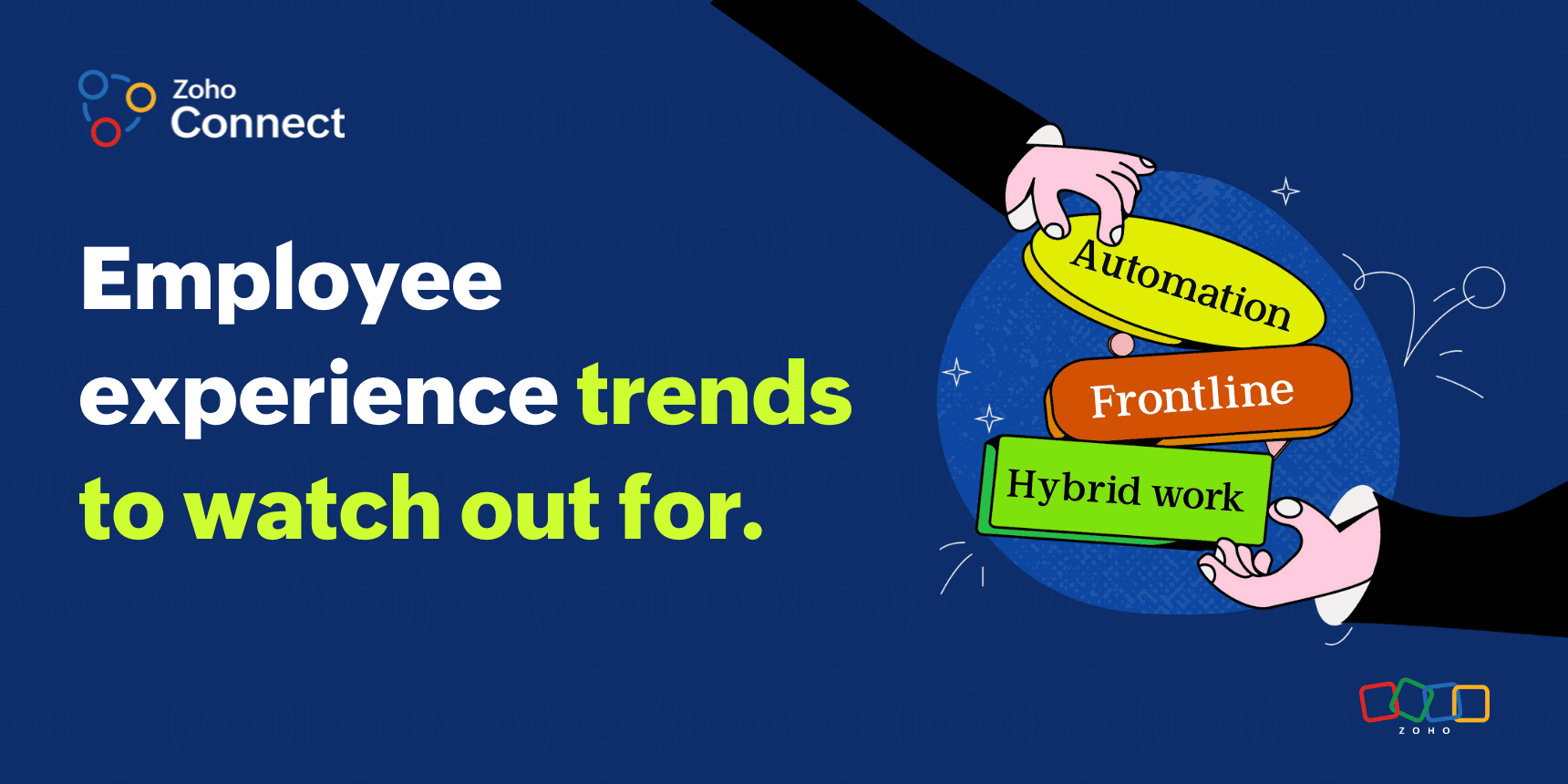
2. Automation is simplifying workflows and reducing friction
Automation in 2026 goes far beyond approvals and ticketing. It now supports onboarding journeys, feedback collection, recognition programs, and internal communications, making sure important actions actually happen without manual follow-ups.
Instead of employees remembering what to do next, systems guide them through processes automatically and consistently.
What organizations should do:
Automate repetitive notifications like training reminders, policy updates, and event announcements so nothing gets missed.
Design guided onboarding and learning journeys that introduce new hires to people, tools, and culture step by step.
Build simple internal apps that reduce dependence on emails and spreadsheets for routine requests.
When workflows are smoother, employees feel less stressed and more focused on meaningful work.
3. Managers are under more pressure and need better support
Managers influence team engagement more than any other role, but they’re also feeling the strain.
Global data shows that manager engagement dropped to just 27% last year, and engagement losses have a ripple effect on team performance. Managers are often juggling communication, performance, well-being, and hybrid coordination without the right visibility or tools.
What organizations should do:
Give managers access to real-time engagement and participation insights instead of waiting for annual surveys.
Make it easy to share updates, recognize contributions, and run quick check-ins within modern intranet platforms like Zoho Connect.
Encourage regular, informal feedback loops instead of relying only on quarterly or annual reviews.
Provide discussion spaces and leadership forums so managers aren’t working in isolation.
When managers are supported with the right tools and visibility, they can focus more on coaching and less on chasing updates.
4. Hybrid work is now the standard, but only if designed intentionally
Hybrid work isn’t a perk anymore; it’s the standard. Around 60% of employees with remote-capable jobs want hybrid arrangements that mix home and office time.
Yet hybrid work only improves experience if communication is centralized and collaboration tools are inclusive. When information lives in siloed chats, emails, or office-only conversations, remote employees feel left out and disconnected.
What organizations should do:
Centralize company communication so all employees receive the same updates at the same time, regardless of location.
Create shared digital spaces where people collaborate, share knowledge, and build relationships beyond project work.
Use virtual town halls, leadership Q&As, and discussion forums to maintain transparency and trust.
When internal communication platforms are inclusive by design, hybrid work feels connected instead of fragmented.
5. Frontline experience directly shapes customer outcomes
Employee experience doesn’t stop inside office walls. Frontline teams in retail, service, healthcare, and manufacturing are the bridge between organizations and customers.
When frontline workers lack timely info or recognition, or they don’t feel like they have a voice, customer satisfaction drops. When they feel informed and included, service quality rises and business outcomes improve.
What organizations should do:
Ensure that frontline employees can access updates, training, and announcements through mobile-friendly platforms like Connect.
Create channels where frontline workers can share ideas, report issues, and suggest improvements easily.
Recognize frontline contributions publicly so their work is visible across the organization.
Involve frontline voices in company conversations, not just top-down communication.
Empowering frontline employees strengthens both culture and customer experience.
Wrapping up
The trends above make one thing clear: Employee experience in 2026 isn’t built through one-off surveys or annual town halls. It’s shaped in the everyday interactions people have with tools, leaders, peers, and their work environment.
The great news? You don’t have to reinvent everything.
With modern intranet platforms like Zoho Connect, your organization can bring communication, collaboration, engagement, and knowledge sharing into one connected digital workplace. From company-wide updates to recognition, automation, and AI-assisted search, everything your people need to feel informed and involved lives in one place.
Ready to build a connected workplace in 2026?
Start with Zoho Connect because when your employees thrive, your business thrives too.