- HOME
- Know Your Tech
- How to build fusion teams: A step-by-step guide
How to build fusion teams: A step-by-step guide
- Last Updated : March 31, 2026
- 292 Views
- 7 Min Read
A product team waits three weeks for IT to build a simple reporting dashboard. By the time it ships, the data requirements have already changed. Delays like these are common when business and tech teams work in separate silos.
Highlights
- Fusion teams break down silos between business and tech, fostering collaboration to drive faster, more innovative solutions.
- Cross-functional teams use low-code/no-code tools, empowering fast problem-solving with minimal IT dependency, ensuring quicker time to market.
- Fusion teams provide enhanced decision-making by combining data and business insights, resulting in scalable, agile solutions.
- To succeed, invest in digital training, cross-functional learning, and leadership development to ensure teams are equipped to handle dynamic challenges.
Fusion teams are here to change that. By bringing business and tech experts together into a single, unified team, fusion teams break down silos and foster direct collaboration. This approach allows both sides to solve problems faster, innovate together, and reduce reliance on IT for every decision.
In this blog post, we'll explore how fusion teams can transform the way your organization collaborates and help you become more agile in a business environment.
What are fusion teams?
Fusion teams are multidisciplinary groups that combine technology and domain expertise to deliver business outcomes. Unlike traditional project teams, they focus on results, often prioritizing product delivery over simply completing projects.
Fusion teams typically bring together professionals from IT, business operations, and analytics. They frequently leverage low-code/no-code (LCNC) platforms to develop technology solutions, reducing dependence on centralized IT and allowing organizations to respond more quickly to evolving business needs.
By blending diverse expertise and technology, fusion teams aim to drive business outcomes, improve performance, and foster innovation through collaboration.
A step-by-step guide to establishing fusion teams
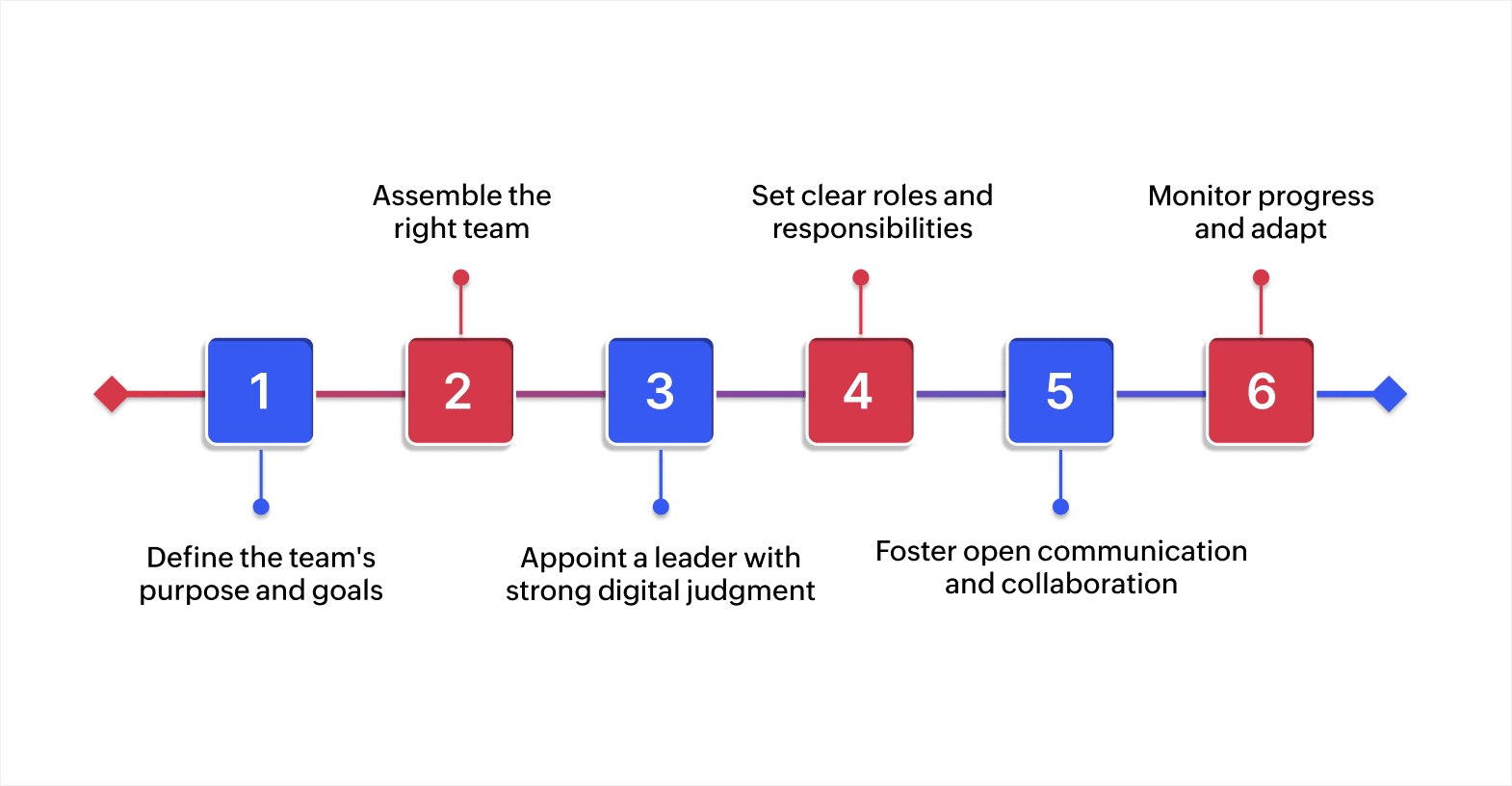
Creating a successful fusion team begins with clear objectives and an effective structure. Below are the steps that will guide you in building a fusion team that can deliver measurable results:
1. Define the team's purpose and goals
Start by setting clear objectives. Whether it's improving processes, developing a new product, or enhancing customer experience, aligning the team's purpose with your organizational strategy ensures that their outcomes directly support business priorities.
2. Assemble the right team
Choose team members who bring complementary skills. A typical fusion team can include a business domain expert, a developer or technical lead, a data analyst, and a project coordinator. Keep the group small and focused. Smaller teams communicate better and move faster.
3. Appoint a leader with strong digital judgment
The success of a fusion team depends heavily on the team leader's digital judgment. A good leader must make informed decisions that align with the business and minimize risks. Leaders with strong digital judgment are more likely to deliver successful outcomes.
4. Set clear roles and responsibilities
Clearly define the roles and responsibilities of each team member from the beginning. This prevents confusion and ensures that every aspect of the project is covered. For example, the developer handles technical aspects, while the business analyst gathers user requirements. Clear role definition enhances productivity and keeps the team focused.
5. Foster open communication and collaboration
Set up channels for real-time messaging, scheduled syncs, and document collaboration. Regular stand-ups and async updates keep everyone informed without overwhelming the calendar.
6. Monitor progress and adapt
Track your team's progress against milestones and be ready to adjust the approach if necessary. Regular feedback helps to identify issues early, allowing the team to remain agile and adapt to changing circumstances.
Now that we've covered the essential steps for building a successful fusion team, let's explore the technologies and tools that can support their collaboration efforts.
What makes fusion teams different?
Fusion teams share some traits with cross-functional project groups, but the differences matter. Here’s what makes fusion teams stand out and why they produce better results:
- Outcome-driven structure: Fusion teams are organized around delivering a specific business result, not completing a project plan. Every member contributes toward a measurable goal.
- Shared ownership of delivery: Business and tech members co-own the solution. There is no handoff between the people who define and the people who build.
- Direct use of technology: Team members across roles use development tools, especially low-code platforms, to prototype and iterate on solutions without waiting for dedicated developers.
- Faster feedback loops: Because the people who understand the problem also build the solution, feedback cycles shorten significantly. Adjustments happen in days, not weeks.
- Built-in domain knowledge: Business context is present at every stage of development. This reduces rework caused by misunderstood requirements or misaligned priorities.
These characteristics make fusion teams well-suited for organizations that need to deliver solutions quickly and respond to changing market conditions without delays.
Challenges and solutions in fusion team implementation
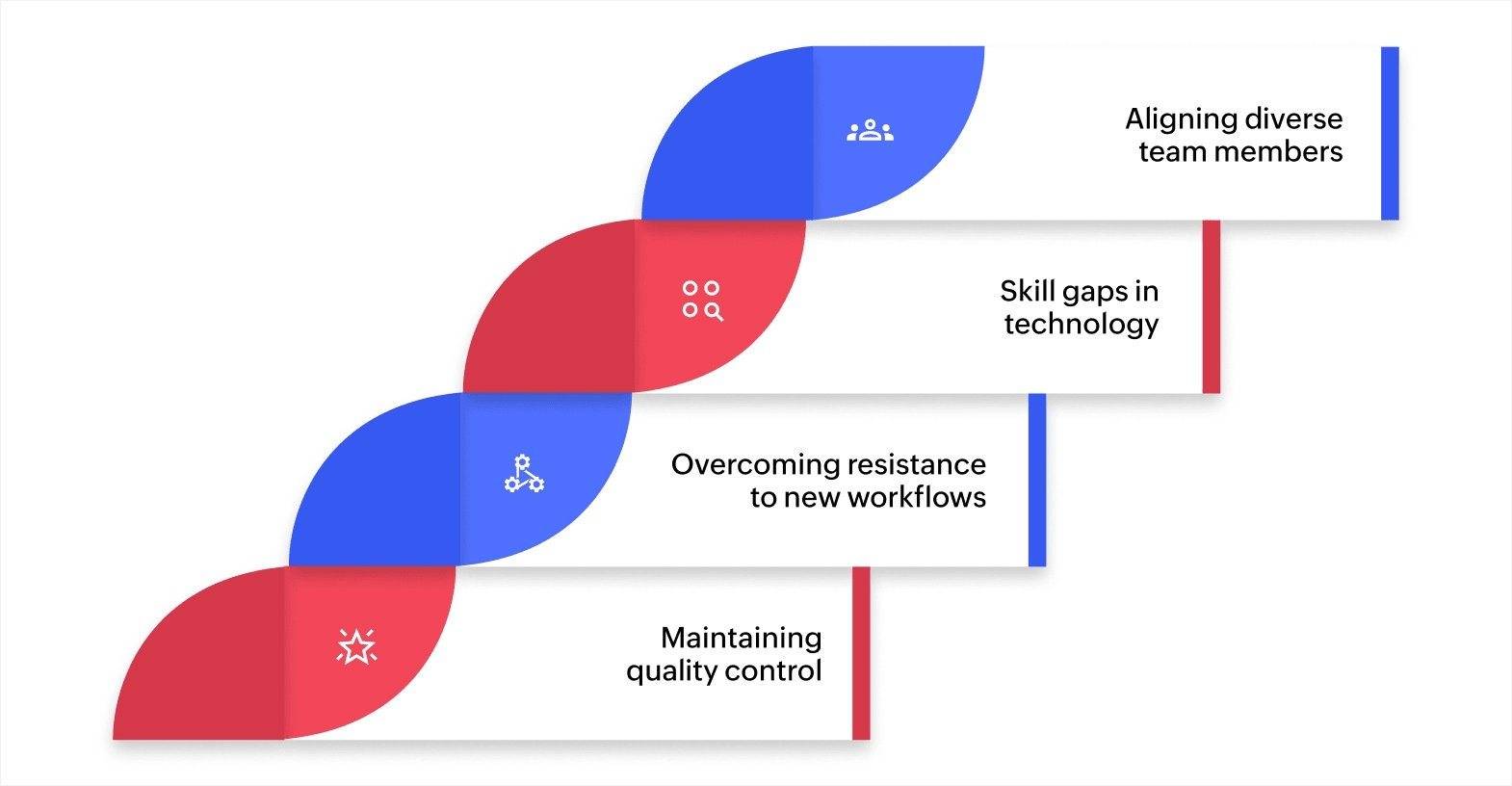
While fusion teams offer great potential, organizations may face challenges during implementation. Addressing these challenges proactively ensures smoother collaboration and faster results. Here are some common issues and strategies to address them:
- Aligning diverse team members: Fusion teams include professionals with different expertise, which can sometimes lead to conflicting priorities. To mitigate this, set clear, measurable goals and establish regular communication channels to ensure all team members stay aligned.
- Skill gaps in technology: Although fusion teams involve a combination of IT and business professionals, not all members may have advanced technical skills. Address this by providing training on LCNC tools and encouraging cross-functional knowledge sharing, ensuring that all members are equipped to contribute effectively.
- Overcoming resistance to new workflows: Some employees may be hesitant to adopt new collaborative models or technology-driven processes. Overcome resistance by providing support, clear explanations of the benefits, and incentives for adopting new approaches.
- Maintaining quality control: As fusion teams work quickly and iteratively, maintaining high-quality standards can be challenging. Implement regular quality checks and feedback loops to ensure that solutions meet business requirements and performance standards.
By fostering a collaborative and agile environment, organizations can maximize the potential of fusion teams to drive innovation and operational efficiency.
Tools and technologies that support fusion team collaboration
To maximize efficiency, fusion teams require the right set of tools. Below are the key technologies that help facilitate collaboration, improve productivity, and ensure your fusion team achieves its goals.
Collaboration tools
Real-time messaging and video calls keep the team connected. Zoho Cliq supports instant messaging and channels for focused discussions. Zoho Meeting handles video calls and screen sharing. For teams already using other platforms, Slack, Microsoft Teams, and Zoom are also common choices.
Project management software
Tracking tasks, timelines, and ownership is essential. Zoho Projects offers task boards, Gantt charts, and time tracking for structured project management. Jira, Trello, and Asana are other widely used options. The right tool depends on the team's workflow and complexity.
Low-code development platforms
Fusion teams need a development platform that both business users and developers can work with. Zoho Creator is an AI-powered, low-code application development platform that lets team members build custom apps, design workflows, and automate tasks with minimal coding.
Zoho Creator was positioned as a Leader in the Everest Group Low-code Application Development Platforms PEAK Matrix Assessment 2025, recognized for helping teams build and deploy applications quickly.
Document and file management tools
Shared document access keeps everyone on the same page. Zoho WorkDrive and Zoho Writer support real-time co-editing and file organization. Google Drive, Dropbox, and SharePoint are other options that may be a good fit, depending on your existing ecosystem.
Analytics and business intelligence tools
Data-driven decisions require good reporting. Zoho Analytics provides dashboards and visual reports that help teams track KPIs and performance. Power BI and Tableau are also popular in organizations with complex analytics needs.
Having identified the tools that will enable your fusion team, it's now time to focus on equipping your team with the necessary skills to succeed. Let's look at the training and upskilling strategies to ensure that your team is well-prepared for the challenges ahead.
Training and upskilling for fusion teams
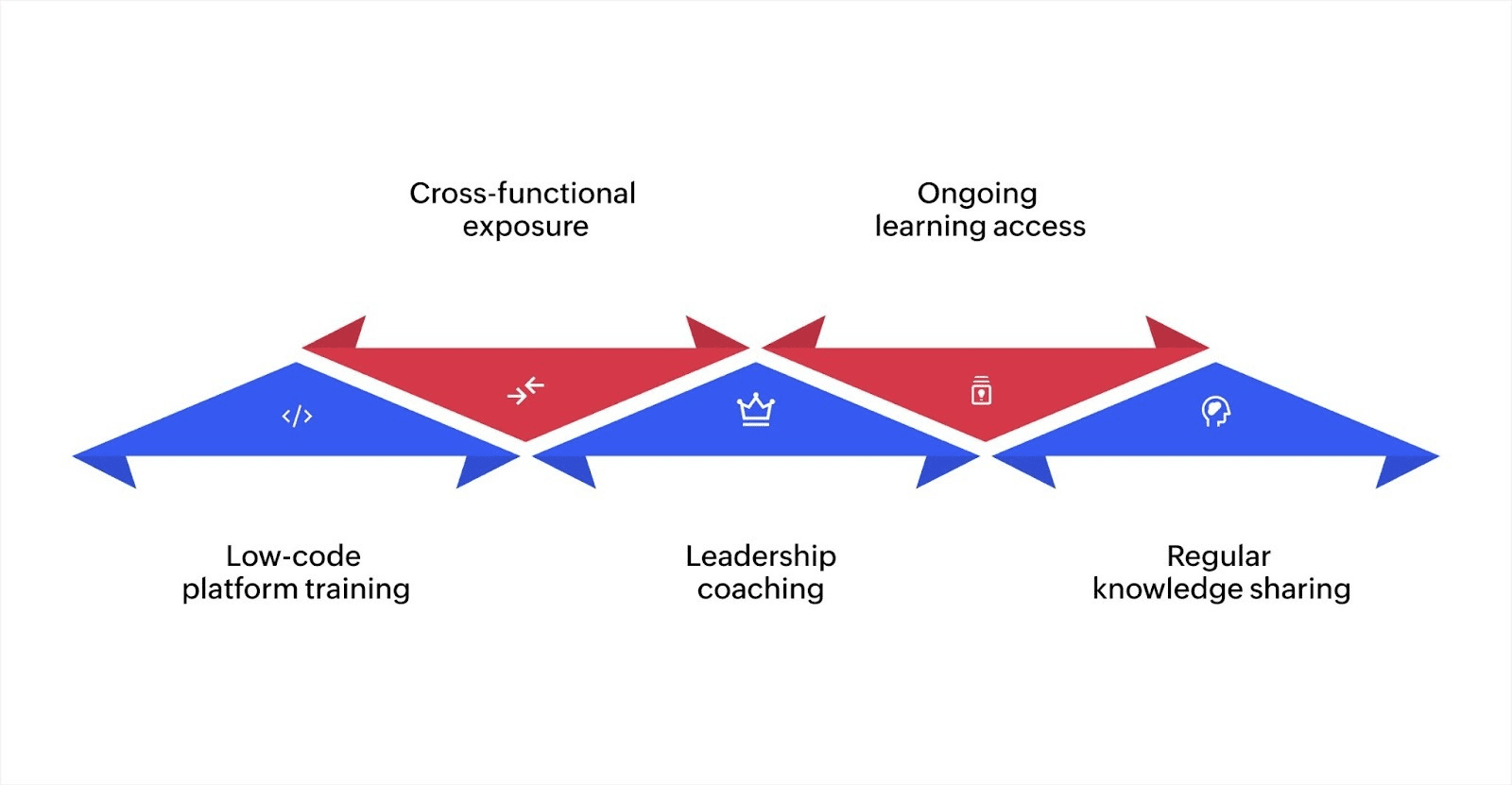
The skills your fusion team needs today will grow as projects get more complex. Regular training helps every member stay productive and contribute across functions.
- Low-code platform training: Ensure every team member, including non-technical ones, can use the team's development platform at a basic level. This reduces dependency on a single developer and speeds up iteration.
- Cross-functional exposure: Encourage business members to learn basic technical concepts and developers to understand business workflows. This shared knowledge improves communication and reduces misunderstandings.
- Leadership coaching: Team leads benefit from training in decision-making, conflict resolution, and stakeholder management. Strong leadership keeps the team focused and productive.
- Ongoing learning access: Provide access to courses, workshops, and internal knowledge bases. The tools and methods your team uses will evolve, and continuous learning keeps the team current.
- Regular knowledge sharing: Schedule short sessions where team members share what they've learned or built. This builds collective expertise and prevents knowledge silos within the team.
Training works best when it is ongoing and related to real project needs. As your fusion team takes on new challenges, their skills should grow with them.
Increase your fusion team’s productivity with Zoho Creator
Most organizations know they need better collaboration between business and tech. The challenge is finding a platform that both sides can use without a steep learning curve or heavy IT involvement.
Zoho Creator helps fusion teams build, test, and deploy custom applications together. Business users can design forms and workflows visually, while developers can extend functionality with scripting and integrations. And apps built on Zoho Creator run natively on the web, iOS, and Android, so your team and stakeholders stay connected from anywhere.
Fusion teams move fast, and they need a platform that keeps up. Sign up for free today and start building the solutions your business needs.
FAQ
1. What industries benefit most from fusion teams?
Fusion teams can benefit a wide range of industries, especially those with complex workflows like healthcare, finance, and technology. These teams are particularly valuable in sectors that need fast adaptation and cross-functional collaboration to meet changing business needs.
2. How do fusion teams align with digital transformation strategies?
Fusion teams are an integral part of digital transformation, as they drive innovation through collaboration across business and technology functions. By using low-code platforms and data-driven decision-making, they enable businesses to innovate faster and adapt to digital demands more effectively.
3. What are the long-term impacts of implementing fusion teams on organizational culture?
Implementing fusion teams can lead to a more collaborative and agile culture. As the divide between IT and business functions is broken down, employees gain a clearer understanding of the company's goals, leading to enhanced teamwork, improved communication, and faster decision-making.
4. How do fusion teams handle cross-departmental conflicts?
Cross-functional teams often face conflicts due to differing priorities or perspectives. However, fusion teams address this by establishing clear goals and roles, ensuring constant communication, and promoting a culture of respect and collaboration to resolve issues quickly.
 Bharathi Monika Venkatesan
Bharathi Monika Venkatesan is a content writer at Zoho Creator. Outside of work, she enjoys exploring history, reading short novels, and cherishing moments of personal introspection.