- HOME
- Know Your Tech
- Top 6 low-code, no-code certification programs in 2026
Top 6 low-code, no-code certification programs in 2026
- Last Updated : March 31, 2026
- 1.0K Views
- 8 Min Read
Your team needs a new approval workflow, a project tracker, or a custom reporting tool. The IT backlog says it will take weeks. You know a low-code platform could solve this, but you are unsure where to start or how to build it yourself.
Highlights
- Low-code, no-code certifications validate your ability to build apps, automate workflows, and manage data using visual development platforms.
- Key skills for becoming a low-code specialist include understanding business processes, basic data modeling, workflow design, and form building.
- Leading platforms like Zoho Creator, Microsoft Power Platform, Salesforce, Mendix, OutSystems, and SAP Build all offer structured certification paths.
- Choosing the right program depends on the platform your organization uses, your learning style, and your specific business goals.
- Certified professionals gain credibility, structured knowledge, and the confidence to reduce IT dependency by building solutions independently.
That is where a low-code, no-code certification comes in. These programs teach business professionals how to build, automate, and manage apps without writing traditional code. They offer structured learning paths designed for people who are not developers.
This blog post covers what low-code, no-code certifications are, the skills you need, and the top six programs to consider. You will also learn how to pick the right one based on your needs.
What is a low-code, no-code certification?
A low-code, no-code certification is a structured program that validates your ability to build applications, automate processes, and manage data using visual development platforms. These certifications are offered by platform vendors like Zoho, Microsoft, Salesforce, Mendix, OutSystems, and SAP. Each program tests your knowledge of the platform's tools, features, and best practices.
Most certifications are designed with business users in mind. You do not need a computer science degree or years of coding experience to enroll. The focus is on practical skills like designing forms, setting up workflows, creating reports, and connecting apps to other business tools.
Certifications typically come in tiers. Entry-level programs cover platform basics and visual app building. Intermediate and advanced tiers go deeper into automation, integrations, and architecture. You can choose the level that matches your current experience and goals.
Why low-code, no-code certifications matter for business professionals
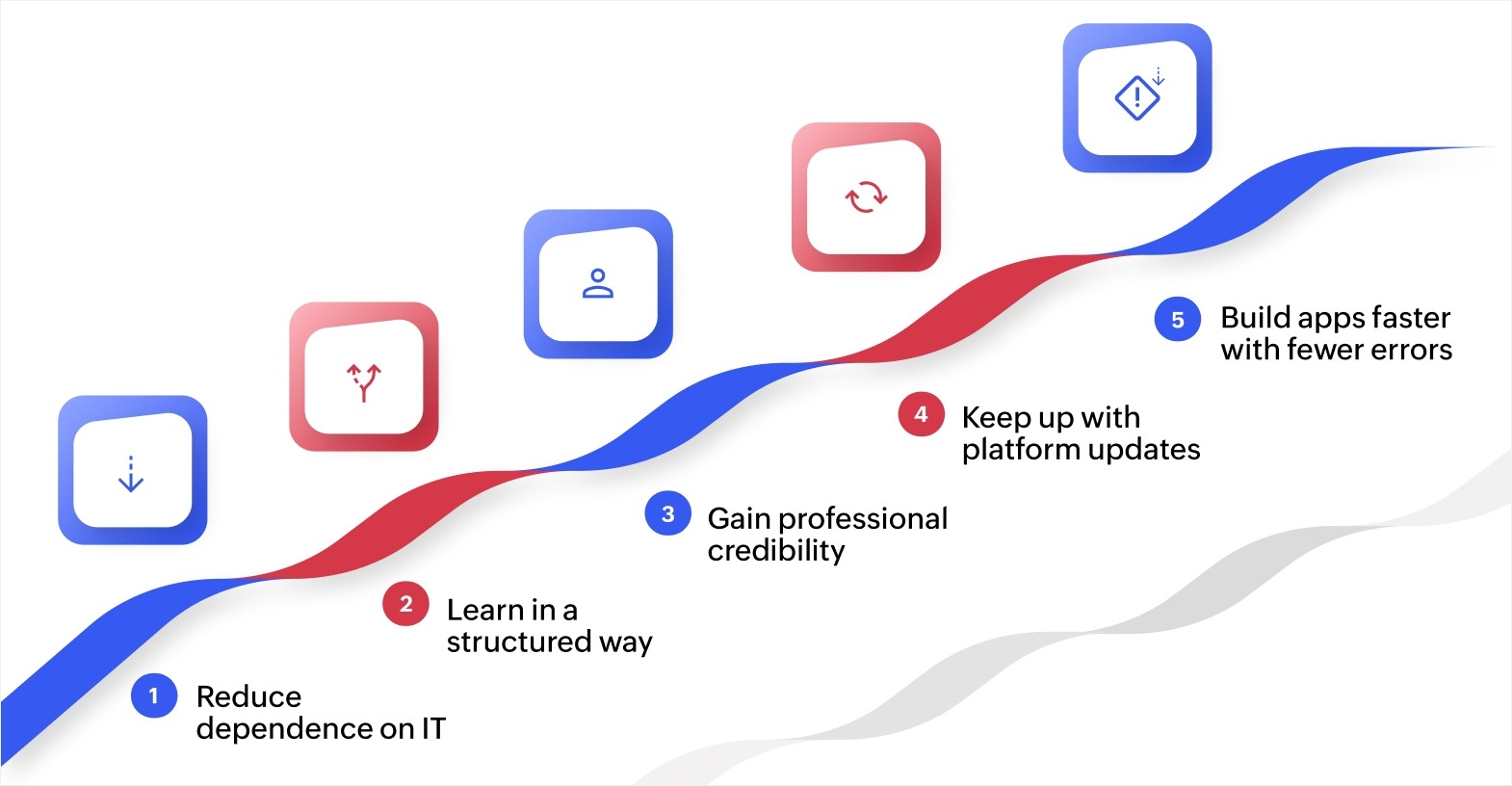
Knowing how to use a low-code platform is useful. Proving that knowledge through a certification makes it more credible and actionable. Here’s why these programs are worth considering.
Reduce your dependence on IT
Business teams often wait days or weeks for IT to build simple tools. A certification teaches you how to build those tools yourself. You can create approval workflows, request forms, and tracking dashboards without filing a support ticket.
Learn in a structured way
Self-taught learning often has gaps. Certification programs follow a structured curriculum that covers all essential topics in order. You learn the right way to build apps from the start, rather than picking up scattered tips from forums.
Gain professional credibility
A certification shows your team and leadership that you have verified skills. It signals that you can independently handle app development and process automation tasks. This is especially valuable when proposing new tools or workflows for your department.
Keep up with platform updates
Low-code platforms evolve quickly. Certification programs are regularly updated to reflect new features and best practices. Staying certified ensures your skills stay current as the platform grows.
Build apps faster and with fewer errors
Certified users tend to follow platform best practices from the beginning. This means fewer broken workflows, cleaner data models, and apps that scale without problems. Structured training helps you avoid common mistakes that self-learners often run into.
A certification gives you verified skills and the confidence to solve real business problems on your own.
Skills you need to become a low-code specialist
You do not need to learn programming languages to become a low-code specialist. The skills involved are more about understanding how your business works and translating that into apps. Here are the core areas to focus on.
- Business process mapping: Identify the steps, rules, and decision points in your workflows before building them into an app.
- Basic data modeling: Understand how to organize information into tables, fields, and relationships so your app stores and retrieves data correctly.
- Form and UI design: Learn how to create input forms and user interfaces that are easy to use and collect the right information.
- Workflow automation: Set up triggers, conditions, and actions that move tasks forward without manual intervention.
- Integration awareness: Know how your app connects with other tools your team uses, such as email, CRM, or accounting software.
- Reporting and dashboards: Build visual reports that help your team track progress, spot trends, and make informed decisions.
- Testing and troubleshooting: Check your apps for errors, test different scenarios, and fix issues before rolling them out to your team.
These skills are practical and easy to pick up. Most certification programs cover all of them through guided lessons, hands-on exercises, and real-world scenarios.
Top 6 low-code, no-code certification programs
Each major low-code platform offers its own certification path. The right choice depends on which platform your organization uses and what type of apps you want to build. Here is a closer look at the top six programs.
1. Zoho Creator certification
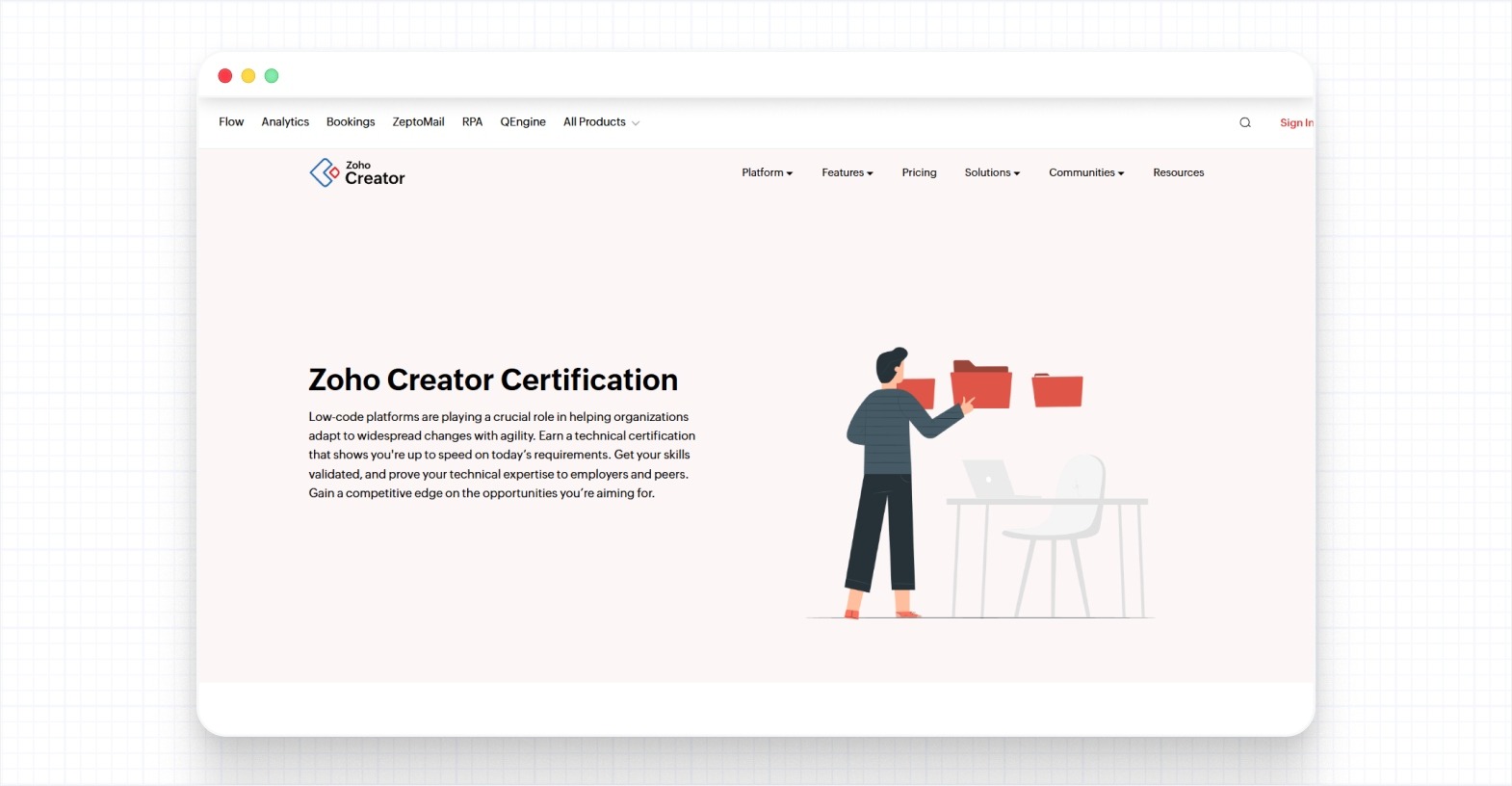
Zoho Creator offers three certification levels: Business User, Associate Developer, and Professional Developer. The Business User certification requires no coding experience and is designed for individuals who want to learn platform basics. The Associate Developer level targets people with some implementation experience, while the Professional level is for those with extensive hands-on work.
Certified users get access to an exclusive peer group of over 700 certified developers, early access to new features, and community recognition. Organizations benefit from having certified team members who can act as internal platform specialists and handle first-level support. Training and certification events are available, and you can also take the exam directly.
2. Microsoft Power Platform Fundamentals (PL-900)
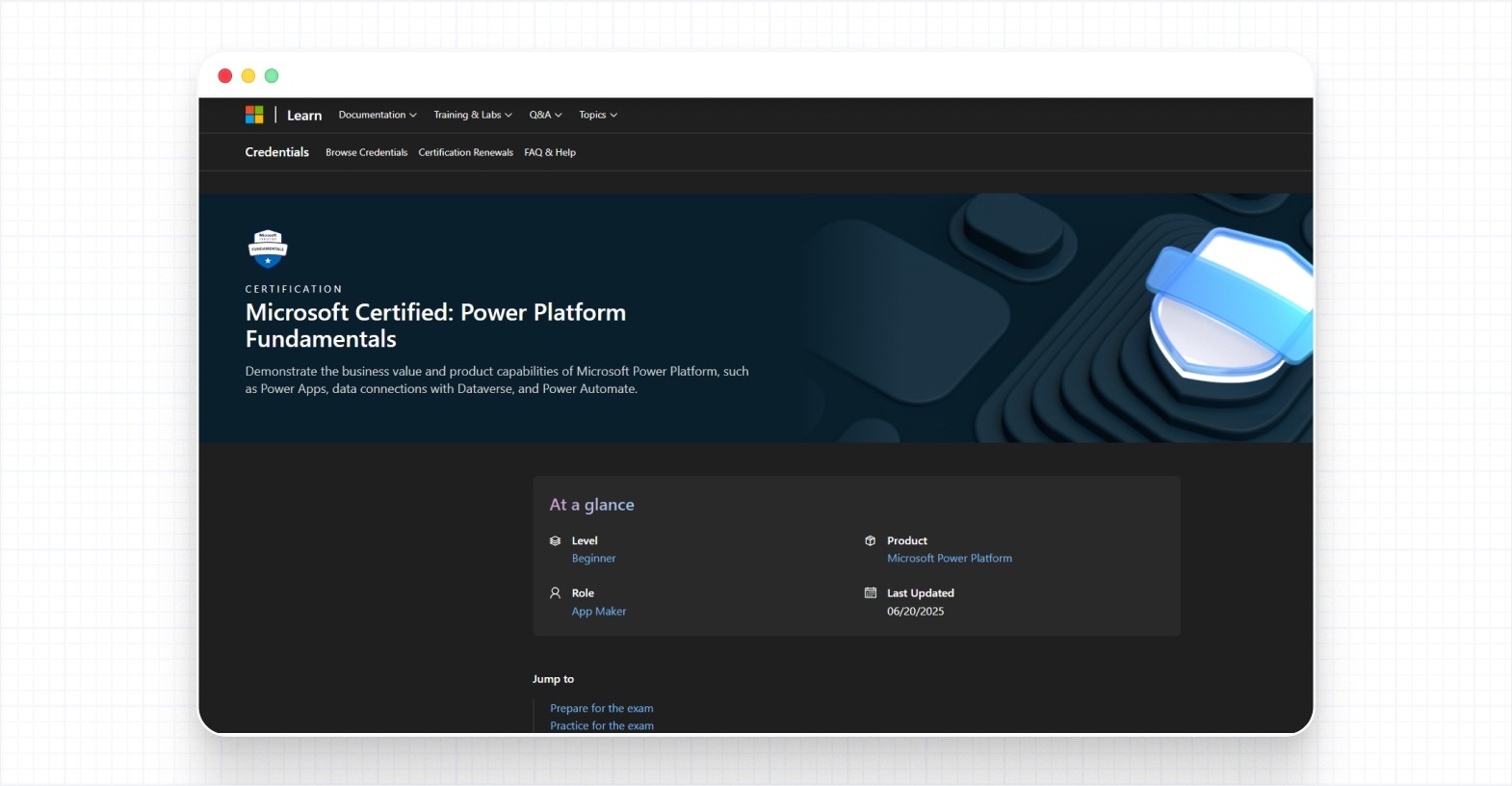
The Microsoft Certified: Power Platform Fundamentals certification covers the core components of Microsoft's low-code ecosystem. This includes Power Apps for app building, Power Automate for workflow automation, Power Pages for self-service portals, and Dataverse for data management.
This is a beginner-level certification with no prerequisites. The exam costs $99 and includes 45 minutes of assessment. Microsoft provides free learning paths through its Learn platform, covering each component in detail. The preparation content totals roughly 10 hours of self-paced modules. This certification is a strong starting point if your organization already uses Microsoft 365 or Azure.
3. Salesforce Flow (ADX301)
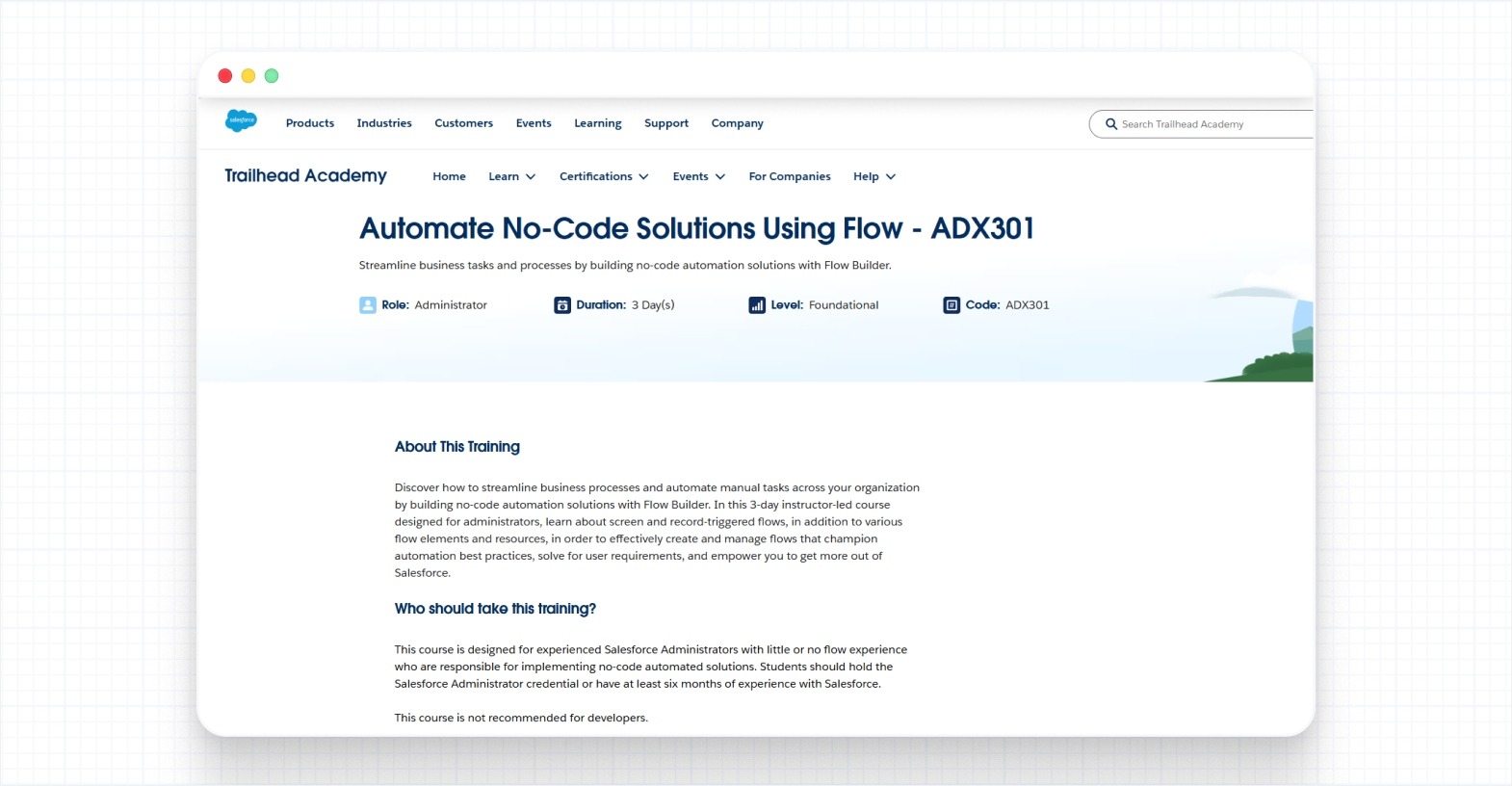
Salesforce offers the Automate No-Code Solutions Using Flow (ADX301) course through Trailhead Academy. This is a three-day, instructor-led training focused on building automations using Flow Builder, Salesforce's visual automation tool.
The course is designed for experienced Salesforce Administrators with little or no Flow experience. It covers screen flows, record-triggered flows, flow elements, and automation best practices. Participants should hold the Salesforce Administrator credential or have at least six months of Salesforce experience. This program is ideal if your organization runs on Salesforce and you want to automate business processes without writing code.
4. Mendix certification program
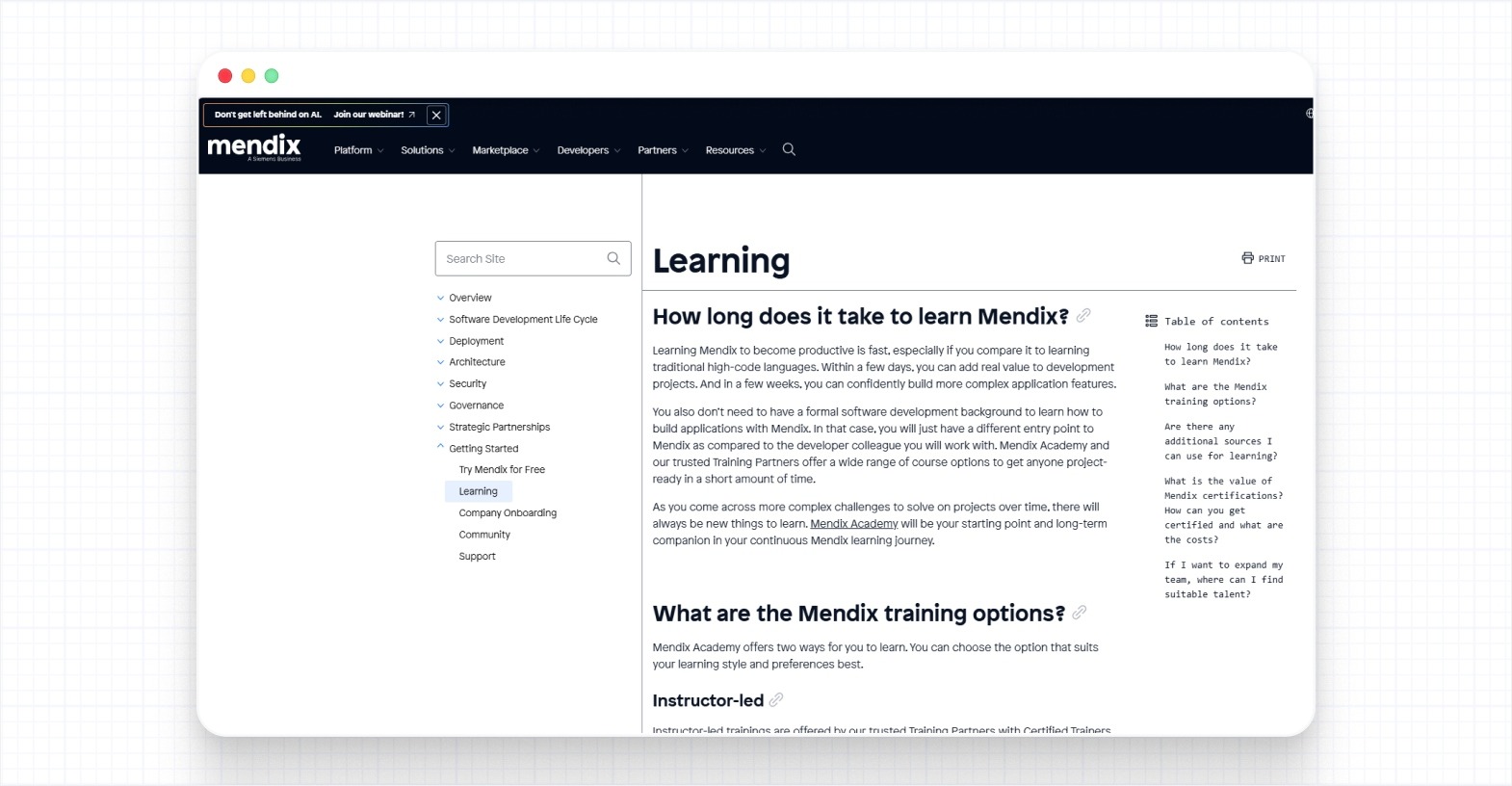
Mendix offers four certification levels: Rapid Developer, Intermediate Developer, Advanced Developer, and Expert Developer. The Rapid Developer exam is free and available online. It covers platform basics, terminology, and the Mendix way of thinking. Anyone involved in a Mendix project should have this foundational certification.
The Intermediate exam costs $158 and requires the Rapid Developer certificate first. Advanced and Expert levels build on real-world project experience. Mendix Academy provides free online learning paths and self-study resources, alongside instructor-led training through certified partners. The platform claims new users can add real value to projects within a few days of learning.
5. OutSystems certification program
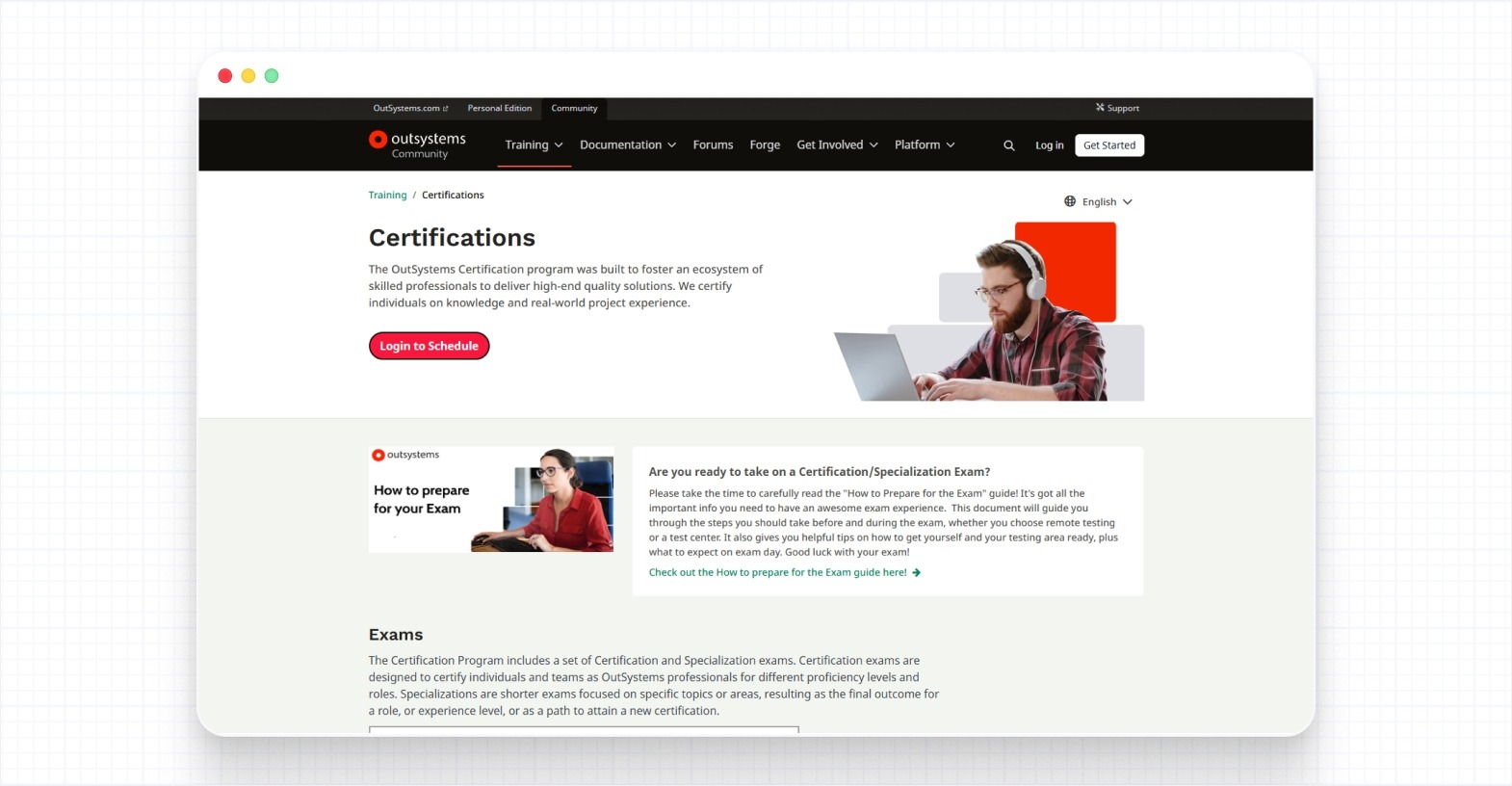
OutSystems offers a comprehensive certification program with both certification and specialization exams. The Associate Developer exam is the entry point, covering fundamentals of web and mobile app development. It costs $200 and takes 120 minutes.
Beyond the associate level, OutSystems offers specializations in areas like architecture, web development, mobile development, front-end development, security, and even Agentic AI. Specialization exams cost $100 each and run 60 to 90 minutes. The program supports both OutSystems Developer Cloud (ODC) and OutSystems 11 (O11) environments. This is a good fit for teams already invested in the OutSystems ecosystem.
6. SAP Build (Low-Code/No-Code)
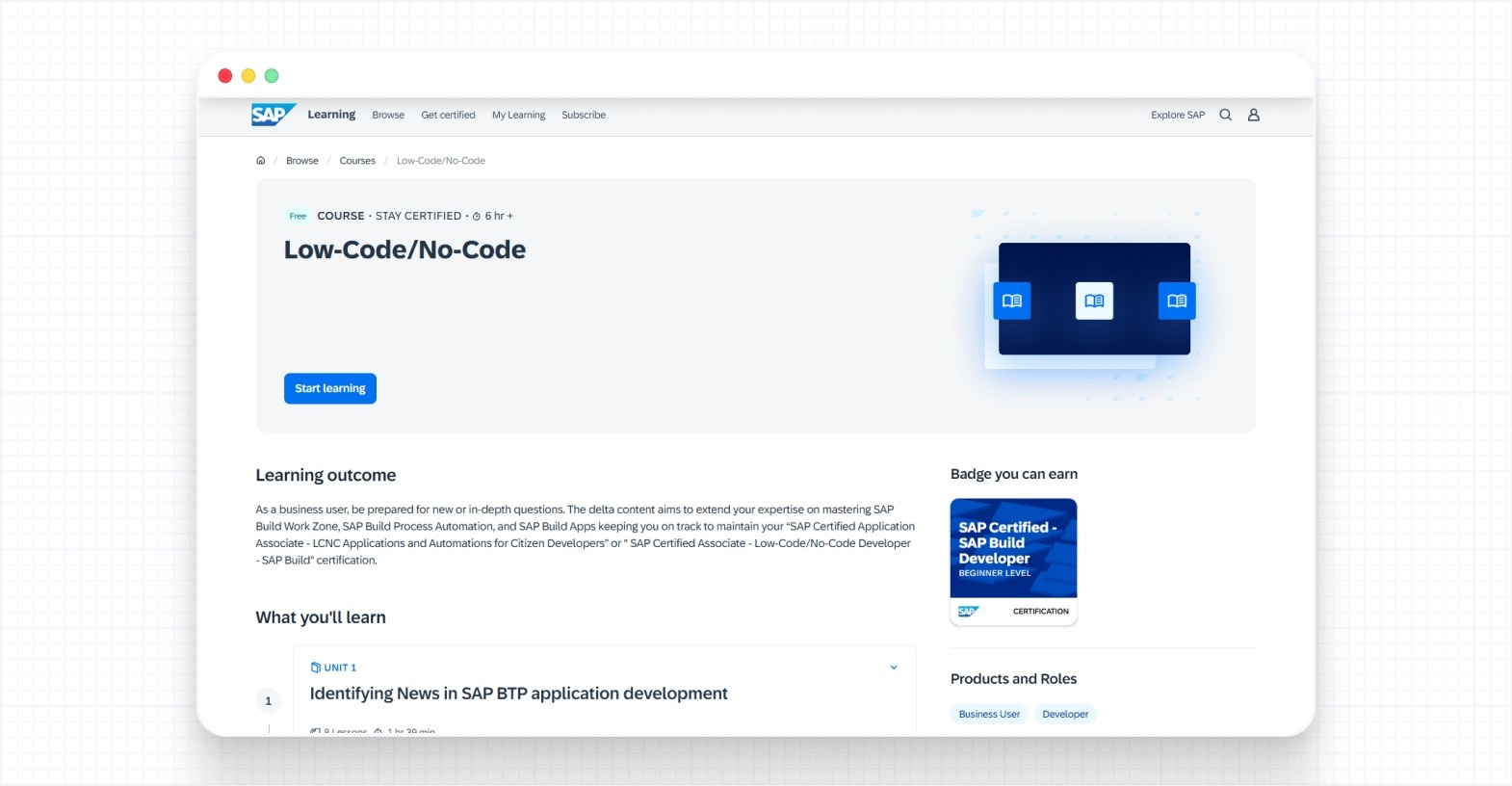
SAP's Low-Code/No-Code course is a free, self-paced program that covers SAP Build Apps, SAP Build Process Automation, and SAP Build Work Zone. The course is designed for both business users and developers, with over six hours of learning content across seven units.
The program serves as preparation for the "SAP Certified Associate - Low-Code/No-Code Developer - SAP Build" certification. It covers UI building, data resource connections, process automation, and extensibility. This is a practical option if your organization uses SAP products and you want to build custom solutions within that ecosystem.
Each program has a different focus, cost, and format. The best choice depends on the tools your team already uses and the type of problems you want to solve.
How to choose the right certification for you
Picking a certification starts with your current work environment and goals. Here are the key factors to consider before enrolling.
- Platform alignment: Start with the vendor your organization already uses so you can apply your new skills to real projects immediately.
- Learning format: Choose self-paced programs (Zoho Creator, Microsoft, SAP, Mendix) if you prefer flexibility, or instructor-led options (Zoho Creator, Salesforce ADX301, Mendix partner training) if you learn better with guided support.
- Cost and time investment: Entry-level certifications from Zoho Creator (Business User) and Mendix (Rapid Developer) are free, while others range from $99 to $200, so factor in both fees and preparation hours.
- Scope of skills: If your focus is workflow automation, Salesforce Flow and SAP Build are strong options, while Zoho Creator, Mendix, and OutSystems cover broader app development use cases.
- Certification tiers: Look for programs with progressive levels so you can start with fundamentals and advance as your experience grows.
Match the certification to your daily work and business goals, not just the platform name. The right program should help you solve the specific problems your team faces today.
Start building custom business apps faster with Zoho Creator
Generic off-the-shelf tools rarely match how your team actually works. Custom development takes too long and costs too much for most business teams.
Zoho Creator is an AI-powered low-code application development platform that helps business professionals build custom apps without writing traditional code. You can design forms, set up automated workflows, create dashboards, and deploy apps across web, iOS, and Android from a single visual builder.
Zoho Creator also offers its own certification program with levels for business users, associate developers, and professional developers. Sign up for free today and start building apps that match exactly how your business works.
FAQ
Do low-code, no-code certifications expire?
Most vendor certifications need renewal as platforms release major updates. Check the specific vendor's policy for renewal timelines, which typically range from one to two years depending on the program.
Can I earn a low-code certification without any coding experience?
Yes. Entry-level certifications from most platforms are built for business users with no coding background. Programs like Zoho Creator Business User and Mendix Rapid Developer specifically target non-technical professionals.
How long does it take to prepare for a low-code certification?
Preparation time varies by program and level. Entry-level certifications typically need 10 to 20 hours of study. Intermediate and advanced certifications may require several weeks of preparation alongside hands-on project work.
Are low-code certifications recognized by employers?
Employers value certifications because they indicate verified, platform-specific skills. Certified professionals can independently build and manage apps, which reduces pressure on IT teams and speeds up project delivery.
Can I earn certifications from more than one platform?
Yes, if your organization uses tools from different vendors, earning certifications across platforms makes you more versatile. Start with the platform you use most and expand from there based on business needs.
 Rohith Krishnan S
Rohith is a product marketer at Zoho. He writes about low-code, workflow automation and follows the latest digital transformation trends. Outside work he enjoys spending time with family, watching football matches and reading about futuristic trends, in no specific order.