- HOME
- More
- Learning and Development
- Top 9 employee learning management systems for 2026
Top 9 employee learning management systems for 2026
- Last Updated : October 20, 2026
- 20 Views
- 7 Min Read

As roles evolve and new skills become necessary, organizations need a way to deliver training, help employees build their skills, and keep track of their progress. But managing employee training manually can get difficult: HR teams have to coordinate training schedules, assign courses, track attendance, collect assessments, monitor completion, and maintain records across different tools. Keeping track of everything can take up a lot of time.
An employee learning management system (LMS) brings these activities together in one place. It helps organizations create and manage courses, assign learning programs, track employee progress, conduct assessments, and generate reports on training activities. However, not every HR platform handles learning in the same way. Some offer a dedicated LMS within their HR platform, while others provide training management features or integrate with specialized learning platforms.
Here's a look at nine employee learning management systems and HR platforms that offer learning and development capabilities.
Zoho People
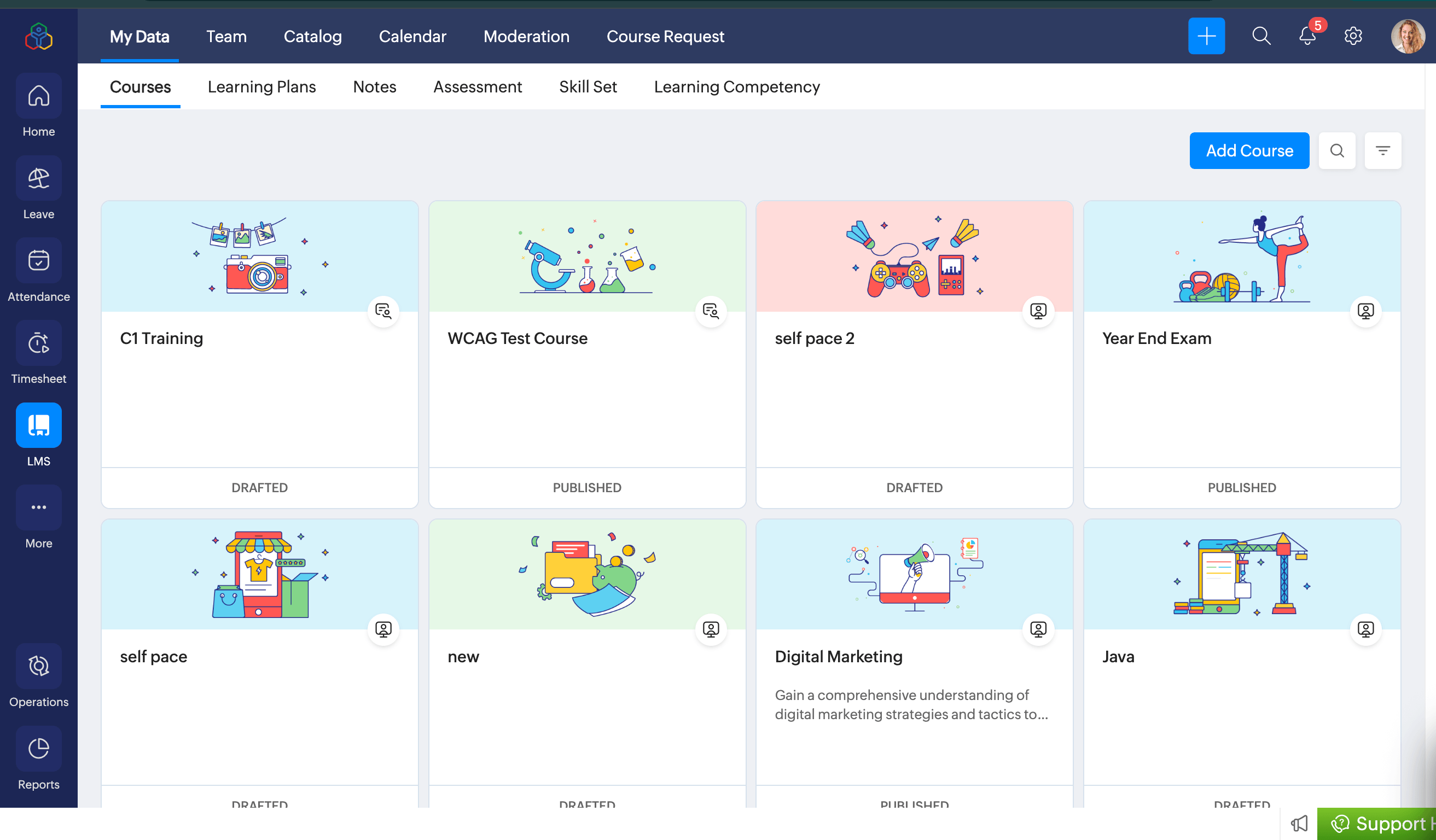
Zoho People is an HR platform that includes a dedicated learning management system to help organizations create, manage, and track employee learning programs.
Its LMS supports both self-paced and blended learning. Organizations can create courses, add learning materials, set up sessions, assign trainers, and enroll employees based on their training needs.
Key features
- Self-paced and blended learning: Offer employees different learning formats based on the training program. Self-paced courses let employees learn independently, while blended learning combines self-learning with instructor-led sessions.
- Course management: Create and organize courses, add learning materials, set up sessions, assign trainers, and manage learners from one place.
- Learning plans: Build structured learning plans with multiple courses and levels to help employees develop specific skills or capabilities.
- Assessments and assignments: Evaluate employee understanding through tests, assignments, and other assessments.
- Course and learner reports: Track learner progress, completion status, grades, course ratings, and other training-related information.
- Certificates and skills: Award certificates when employees complete courses and associate learning with employee skills and competencies.
- Performance integration: Connect employee learning with performance management to give managers a better view of employee development.
- Employee engagement: Let learners provide feedback, participate in course discussions, and interact with their training programs.
Zoho People's LMS also supports learning administration for employees, managers, and administrators. Each group can perform learning-related activities based on their role.
Keka
Source: Keka
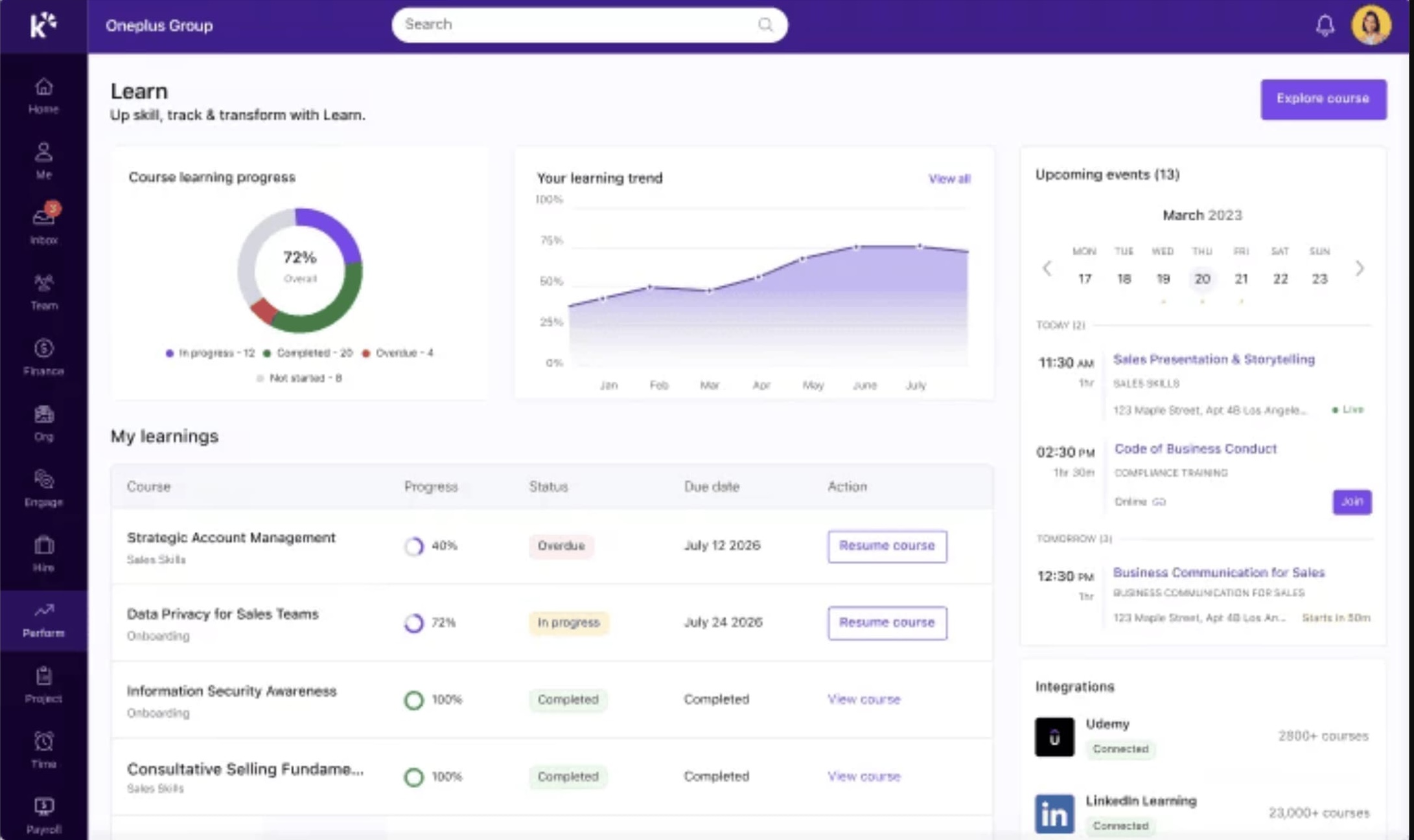
Keka is an HR and payroll platform that offers learning and development capabilities. It connects employee training with skill development, performance, and career growth.
Organizations can create courses, assign training, track progress, and build learning paths for employees. Keka also offers compliance training capabilities, allowing organizations to assign training based on factors such as employee roles and locations.
Key features
- Course creation: Create custom courses using existing training content or AI-assisted course creation.
- Learning paths: Build personalized learning experiences based on employee roles, capabilities, and development needs.
- Skill-gap training: Identify development needs and recommend courses to help employees address skill gaps.
- Compliance training: Assign mandatory training based on employee roles or locations.
- Interactive learning: Use videos, quizzes, and flashcards to make training more engaging.
- Training analytics: Track course completion, employee progress, and training outcomes through reports and analytics.
- External learning integrations: Connect learning platforms and content providers with Keka to bring external learning resources into the employee learning ecosystem.
Darwinbox
Source: Darwinbox
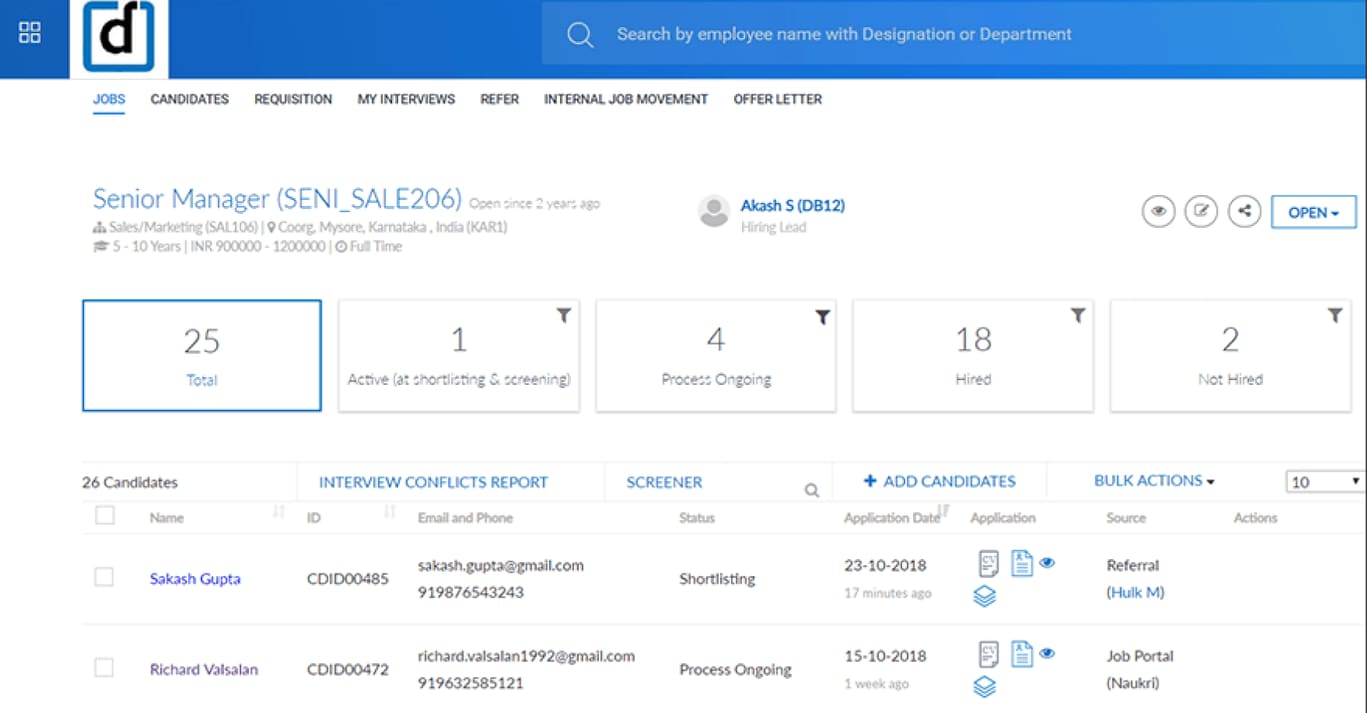
Darwinbox is an HCM platform that includes learning and development as part of its broader talent management capabilities. Its learning management functionality helps organizations overseeemployee training alongside employee records, skills, performance, and career development.
Organizations can use the platform to store learning content, create learning paths, assign training, and track employee progress.
Key features
- Course catalogs: Organize available learning content and make relevant courses accessible to employees.
- Learning paths: Create structured learning journeys based on employee roles, skills, and development needs.
- Training assignments: Assign courses and learning programs to employees and monitor their progress.
- Compliance training: Manage mandatory learning requirements and track completion.
- Certification tracking: Monitor employee certifications and learning requirements.
- Skills development: Connect learning activities with employee skills and capability development.
- Mobile learning: Give employees access to learning activities through a mobile-friendly experience.
- HR integration: Keep learning information connected with employee profiles and other HR processes.
Gusto
Source: Gusto
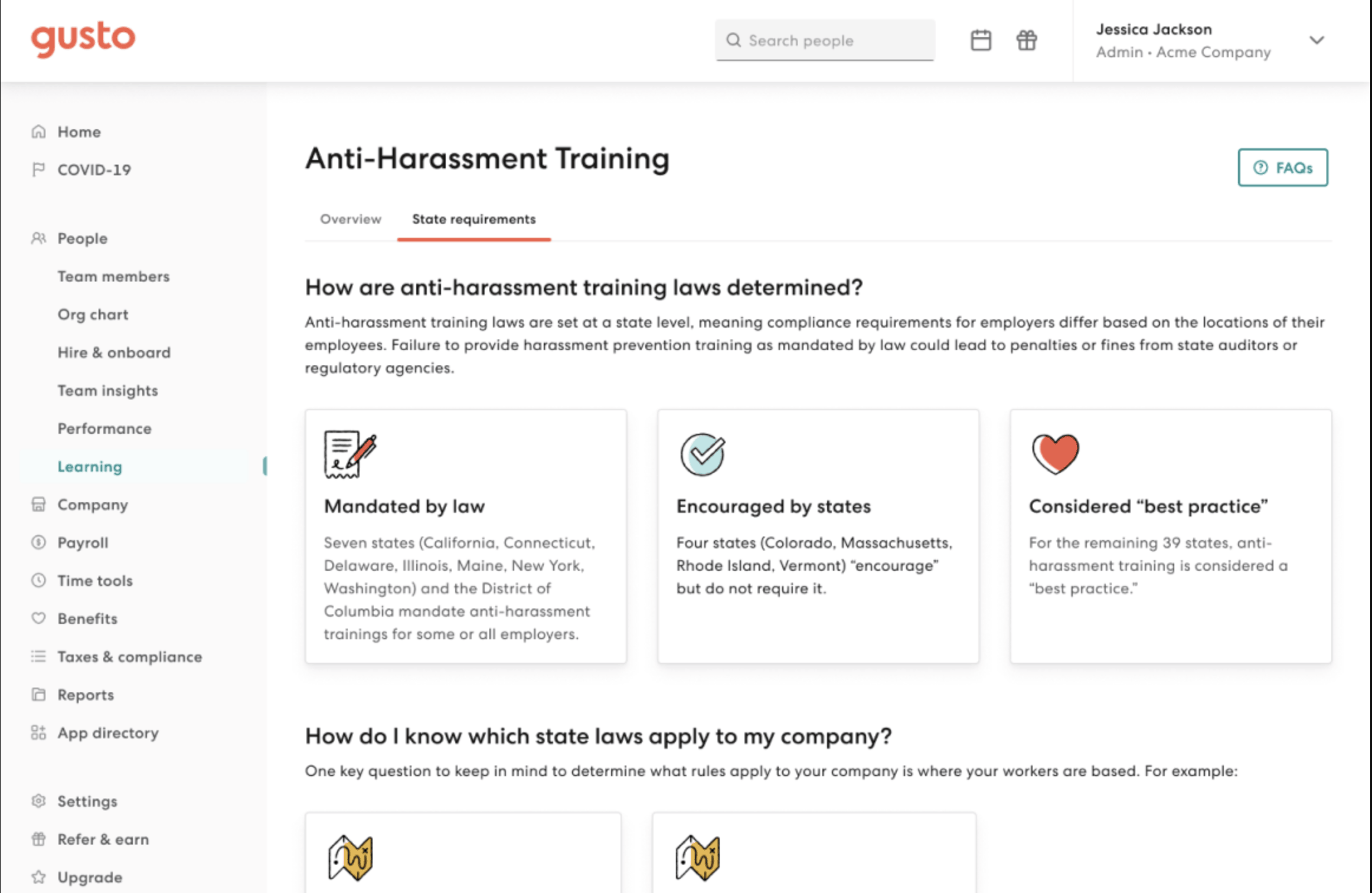
Gusto is another HR and payroll platform that provides an integrated LMS, particularly for small businesses.
Its LMS allows organizations to assign training, monitor course progress, and send reminders from within the Gusto platform. This can help smaller organizations manage employee training without having to maintain a separate training system.
Key features
- Training assignments: Assign learning programs to employees based on organizational requirements.
- Course tracking: Monitor employee progress and completion.
- Completion reminders: Send reminders to employees when they need to complete their training.
- Skills and compliance training: Support employee development as well as mandatory workplace training.
- Integrated employee experience: Manage learning alongside other HR processes within the same platform.
- Onboarding and upskilling: Use training as part of employee onboarding and ongoing development.
Gusto's LMS is designed as an integrated learning solution for small businesses. It helps organizations manage employee training alongside their other HR activities without adding another standalone system to their technology stack.
Namely
Source: Namely
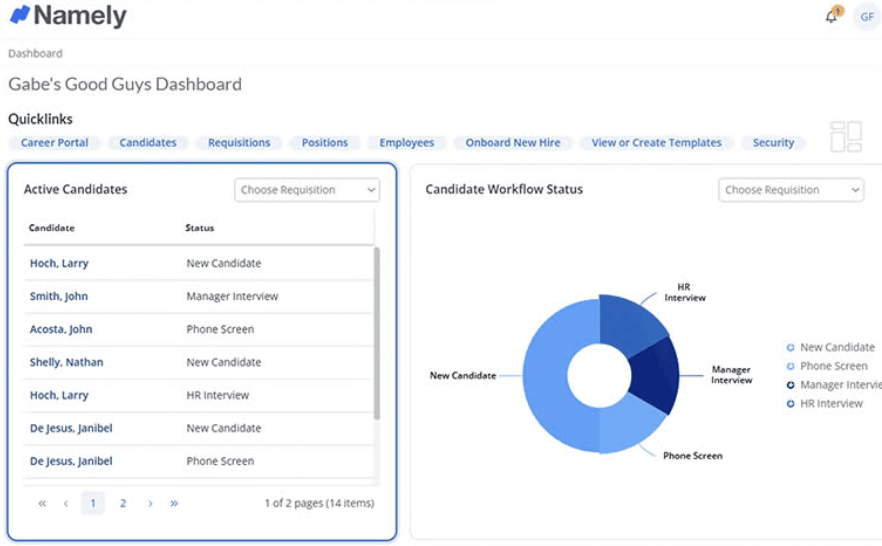
Namely is built around the core HR, payroll, benefits, talent, and employee experience processes. Its learning and development capabilities include training management, employee development, and career-related functionality.
The learning capabilities in Namely are a part of its broader talent management ecosystem.
Key features
- Training management: Track employee participation and progress across training programs.
- Learning and development: Support employee development initiatives and ongoing skill building.
- Competency management: Manage employee skills and competencies as part of broader talent processes.
- Career development: Support employee growth and development planning.
- Onboarding: Include training and development activities in employee onboarding.
- Employee records: Keep training-related information connected with employee data.
- Reporting and dashboards: Monitor employee and talent-related information through centralized reporting.
BambooHR
Source: BambooHR
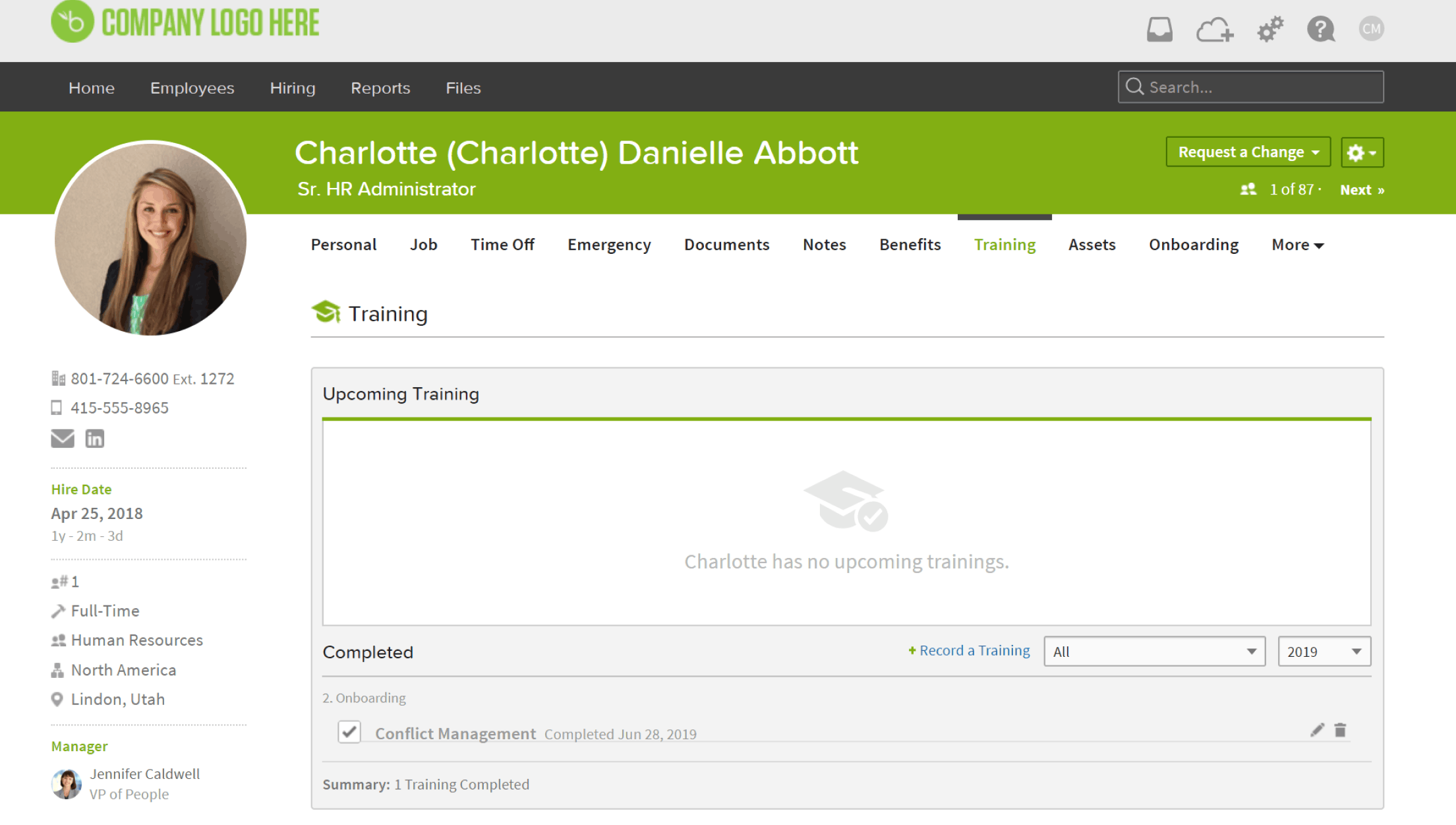
BambooHR is an HR platform that supports employee instruction through its training capabilities and integrations with learning platforms.
Its ecosystem helps organizations set up training, maintain records, and connect HR information with external learning solutions. BambooHR also offers compliance training capabilities for organizations that need to manage mandatory workplace courses. It gives organizations the flexibility to manage certain training activities alongside their HR processes or connect with specialized learning tools when they need more advanced LMS functionality.
Key features
- Training management: Create and manage employee training records and training categories.
- Compliance training: Assign compliance courses based on employee roles, departments, or locations, where supported.
- Automated reminders: Send reminders and manage recurring training requirements.
- Completion tracking: Monitor training completion through reports and dashboards.
- Certificates: Provide employees with completion certificates for applicable training programs.
- Self-paced learning: Support bite-sized training that employees can complete according to their schedules.
- Learning integrations: Connect BambooHR with dedicated learning platforms such as TalentLMS to manage broader learning programs.
ADP Workforce Now
Source: ADP Workforce Now
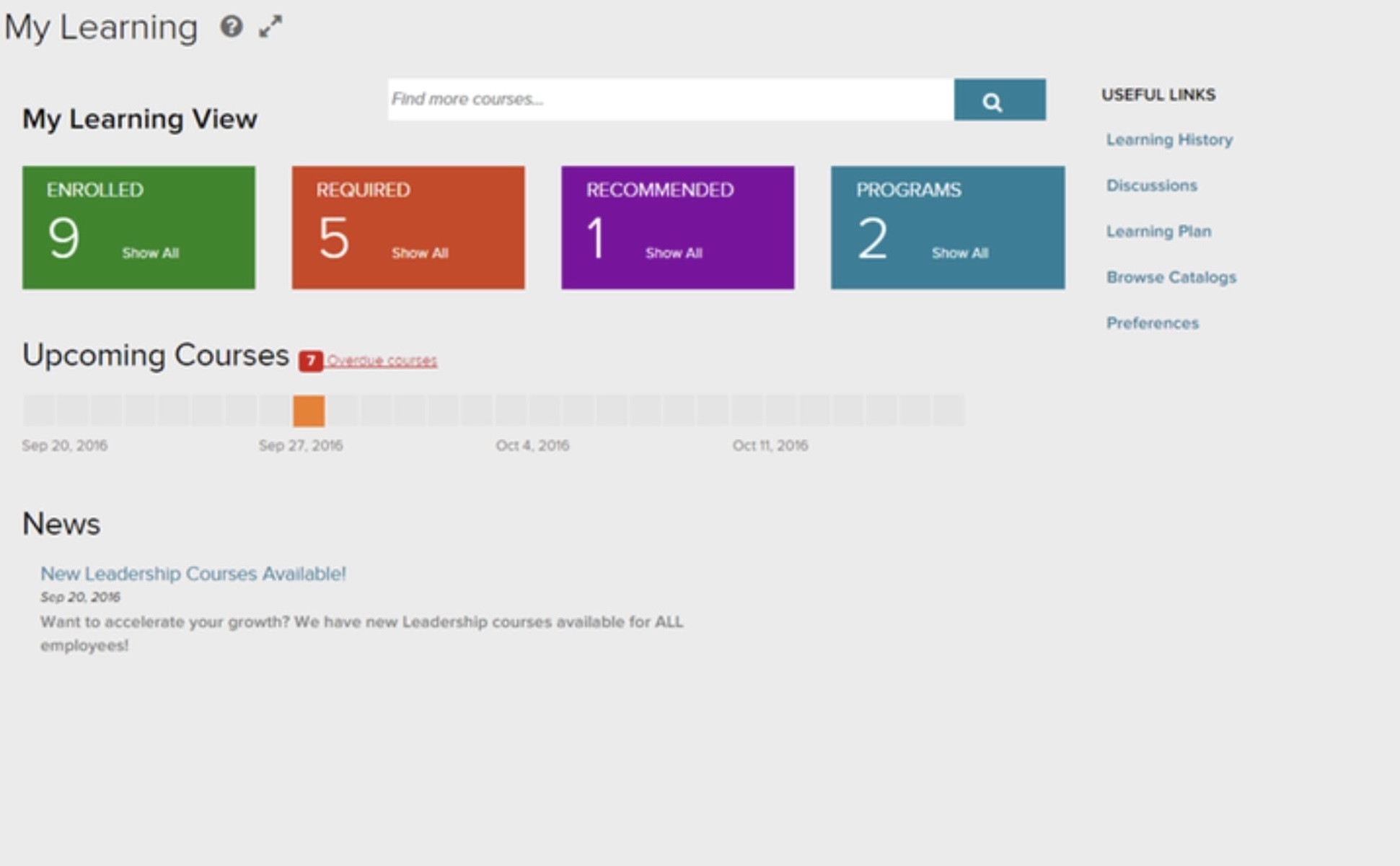
ADP Workforce Now supports workforce management, payroll, talent, and other HR processes. For employee learning, organizations can extend Workforce Now through learning and training solutions available in the ADP Marketplace.
This lets businesses connect their employee data with specialized learning management platforms instead of relying only on native training functionality.
Key features
- LMS integrations: Connect Workforce Now with dedicated learning platforms through the ADP Marketplace.
- Employee data synchronization: Transfer employee information between Workforce Now and connected learning platforms.
- Single sign-on: Some LMS integrations allow employees to access learning platforms using their ADP credentials.
- Automated course assignment: Connected LMS solutions can use employee information to assign courses based on roles, teams, or other attributes.
- Learning paths: Create structured learning programs for different employee groups through the connected LMS.
- Compliance training: Deliver and track mandatory workplace training through connected learning platforms.
- Training reports: Monitor employee progress, completion, certifications, and other learning data.
Rippling
Source: Rippling
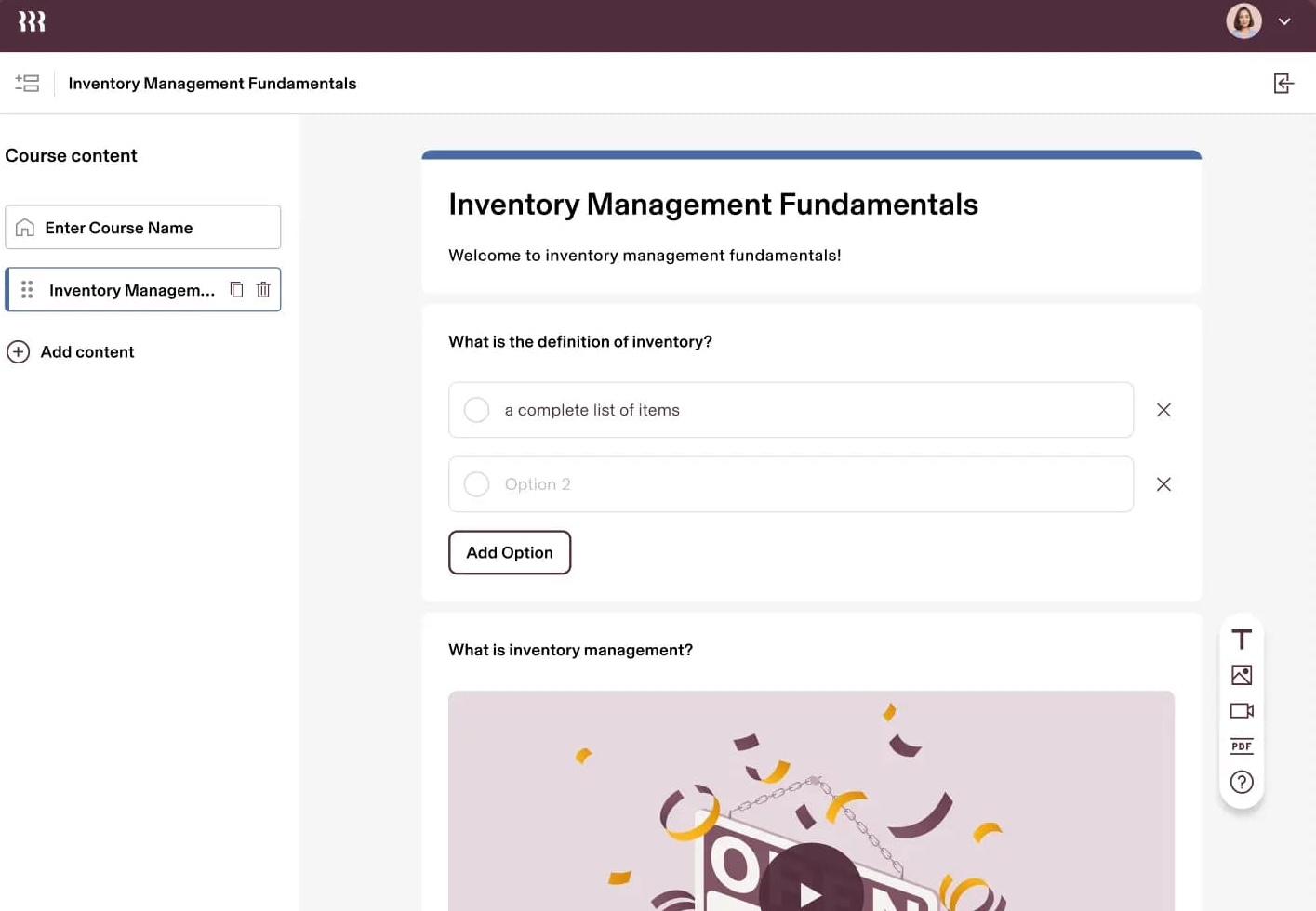
Rippling combines HR, payroll, IT, and workforce management capabilities with an employee learning management system. Its LMS automates training based on employee information, reducing the need for HR teams to manage every course assignment manually.
It connects learning with employee data, allowing training requirements to change as an employee joins the organization, changes roles, or moves locations. This can help HR teams keep training assignments up to date without having to review every employee's requirements manually.
Key features
- Automated course assignments: Assign training based on employee attributes such as role, department, or tenure.
- Course builder: Create custom courses using videos, images, quizzes, and other content.
- Content library: Access thousands of prebuilt courses through Rippling's partnership with Go1.
- Compliance training: Automate mandatory training and manage location-specific requirements.
- Learning paths: Build structured learning programs for different roles and employee groups.
- Employee self-enrollment: Allow employees to enroll in relevant courses themselves.
- Mobile learning: Give employees access to training through mobile-friendly learning experiences.
- Reporting and analytics: Track course completion, overdue training, and team learning progress.
SAP SuccessFactors
Source: SAP SuccessFactors
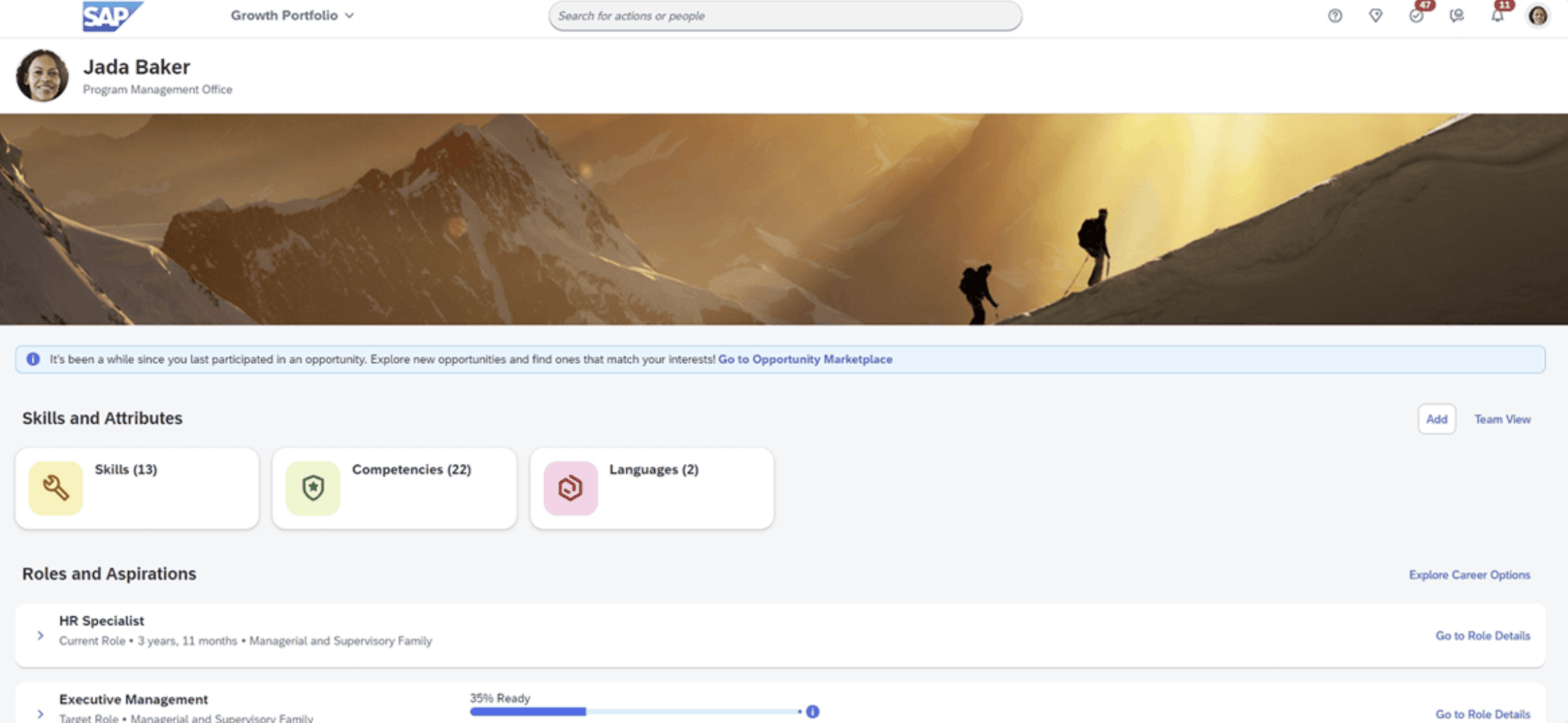
SAP SuccessFactors is an HCM suite that includes SAP SuccessFactors Learning, a dedicated corporate learning management system.
The platform focuses on employee learning, compliance, skills development, and structured training programs. It is designed to support organizations with complex learning requirements, including those that need to manage training across different teams and locations.
Key features
- Learning management: Create, deliver, administer, and track employee learning programs.
- Learning libraries: Create centralized libraries where employees can search for and browse available learning opportunities.
- Assessments: Use quizzes and exams to evaluate employee understanding.
- Learning curricula: Build structured learning requirements and recurring training programs.
- Compliance training: Assign mandatory learning and track qualifications that require periodic renewal.
- Skills development: Connect learning with employee skills and development requirements.
- Learning recommendations: Recommend learning opportunities based on employee roles, skills, and career needs.
- Third-party content: Connect with external content providers and learning resources.
- Virtual learning: Support learning through tools such as Microsoft Teams and Zoom, where compatible integrations are available.
Wrapping up
Learning platforms differ in how they approach employee development. Some provide a dedicated LMS, while others rely on integrations with specialized learning providers.
When evaluating an employee LMS, organizations should consider factors like course management, learning formats, assessments, learning paths, compliance training, reporting, integrations, and mobile accessibility. It's also worth checking how closely learning data connects with other employee information and whether the required features are included in the selected plan.
The right learning management system ultimately depends on the organization's workforce, training requirements, existing HR technology, and learning and development goals.