- HOME
- More
- On Zoho People
- Transforming manufacturing HR operations with HR software
Transforming manufacturing HR operations with HR software
- Last Updated : January 7, 2026
- 858 Views
- 3 Min Read
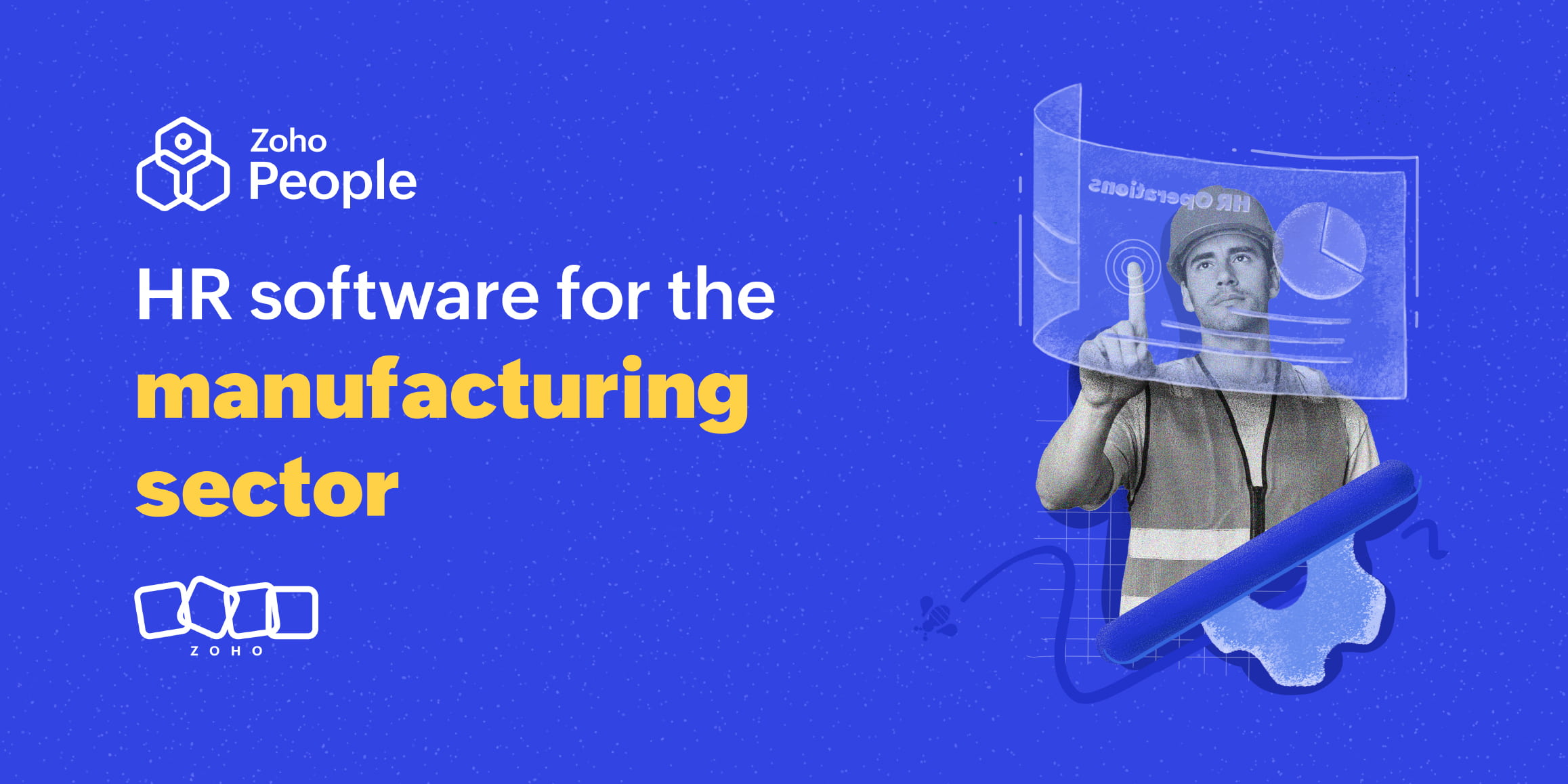
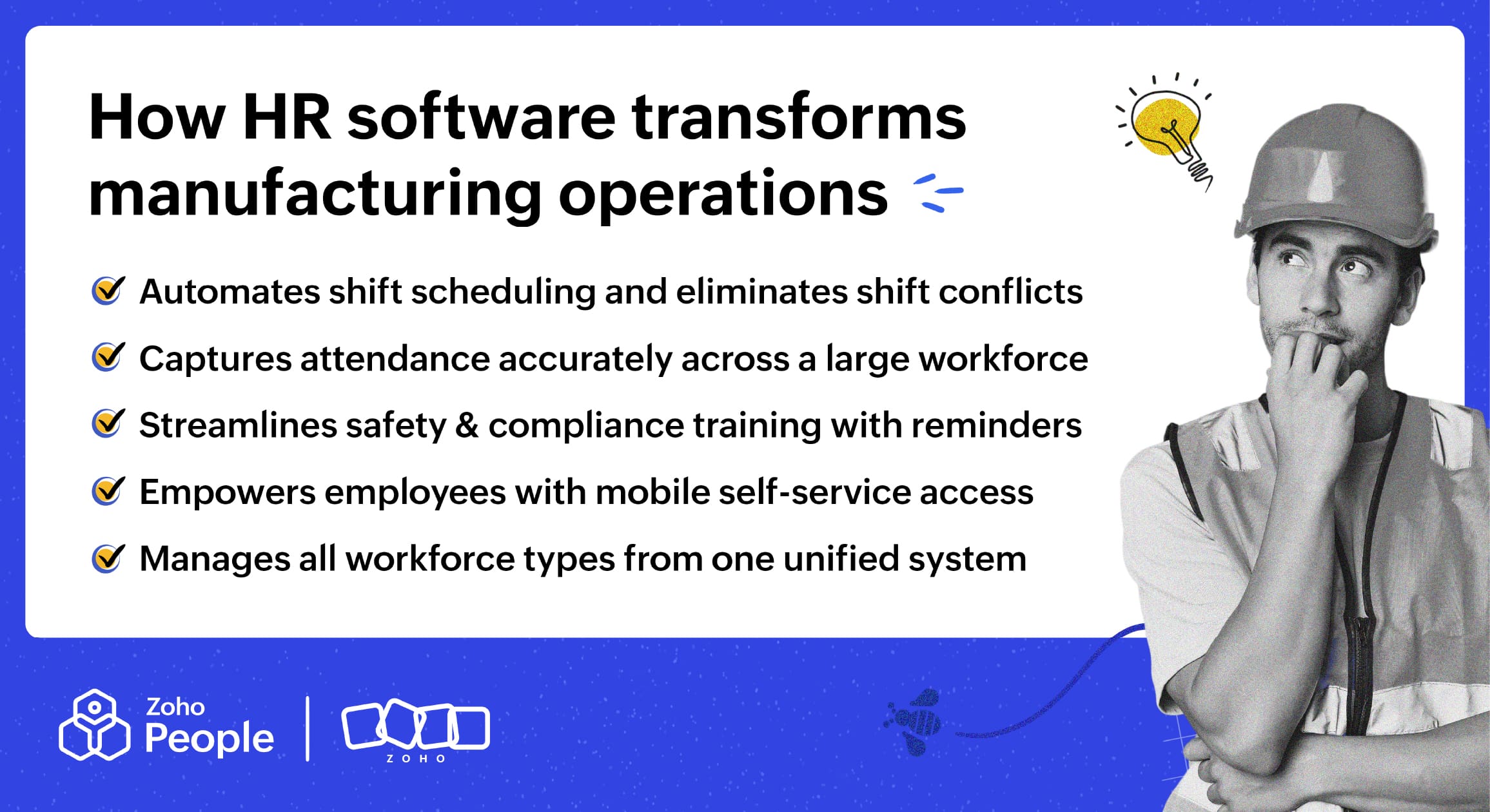
Managing HR for a large manufacturing workforce with complex shift patterns requires extensive planning. There's always some chaos in the shift schedule, missing attendance data, a safety and compliance training that is overdue, and a seasonal hire waiting to be onboarded. Traditional paper-based HR processes can never keep up with such complicated operations. This is where modern HR software truly shines. Let's take a quick look at how HR software can solve some of the most pressing HR challenges for the manufacturing sector.
Challenge #1: Complex shift schedules and frequent shift conflicts
Manufacturing facilities often operate around the clock, and it can be a challenge to effectively manage shift schedules for across multiple sites, especially when there are frequent rotations. Without a dedicated system, these complexities can easily lead to scheduling conflicts.
How HR software helps
HR software systems offer flexible, customizable shift scheduling that enables HR teams to automate schedules according to organizational needs. Multiple shifts can be set up in a few steps with seamless employee assignment. Shifts rotate automatically based on the defined frequency. Intuitive reports give an overview of all employees and their assigned shifts.
Challenge #2: Tracking attendance of a large workforce
When HR tracks distributed employees using registers, spreadsheets, and other paper-based processes, it can pave the way for issues like buddy punching, inaccurate timestamps, and error-prone attendance entries.
How HR software helps
The software's attendance management system can make a big difference in daily operations. If your organization has an existing biometric system, it can be integrated with the HR software for easy attendance tracking. If not, most systems support facial recognition, web check-in, and mobile check-in. It also calculates every employee's working hours, break hours, and overtime hours automatically.
Challenge #3: Navigating compliance and safety training requirements
Manufacturing employees are expected to take part in mandatory training programs to ensure compliance and safety on the job. For instance, OSHA regulations in the USA require initial training for employees in hazardous roles, along with regular refreshers. On the HR side, tracking course completion status, refresher cycles, documentation, and audits manually becomes overwhelming and risky without proper automation.
How HR software helps
The learning management system that comes with HR software can make training much more efficient. Managers can easily assign mandatory training programs to employees based on their roles, skill levels, and exposure to hazardous environments. HR teams can also assign training programs to new hires as part of onboarding so that they're prepared for their role earlier on. Automated reminders keep employees informed about training deadlines and help them complete courses on time. HR teams can track all courses, ratings, and progress from one place. This keeps compliance-related documentation digital and audit-ready.
Challenge #4: Limited access to HR services for blue-collar workers
Many factory-based and blue-collar workers lack access to HR services. They may have to contact their HR teams for every request related to leave, attendance, payroll, and other routine operations. This can be difficult for them as well as the HR team, as it creates more administrative work.
How HR software helps
With HR software, workers can access their HR data through a self-service portal, either powered by a mobile or web app. They can apply for leave, mark attendance, access payslips, update personal records, and more without having to reach out to the HR team. This gives them more control over their HR operations, while HR teams can avoid repeated queries.
Challenge #5: Managing different types of employees
The manufacturing sector often has different types of employees, including hourly workers, salaried workers, seasonal hires, and independent contractors. Managing each type according to labor laws can be challenging for HR teams when done manually.
How HR software helps
HR software keeps every piece of workforce data, regardless of employment type, maintained in one centralized system. This enables HR teams to automate complex steps involved in calculating wages, overtime, deductions, and allowances based on labor laws and individual contract terms, ensuring complete accuracy. They can also onboard employees digitally with auto-generated IDs and contract records, eliminating paperwork and delays. Additionally, software helps categorize employees by department, role, or employment type, creating a strong foundation for error-free payroll processing and smooth administrative operations.
Wrapping up
Managing HR operations in the manufacturing sector requires accuracy and transparency, and this is best achieved using intuitive HR software. A comprehensive HR solution enables manufacturing organizations to streamline complex processes, maintain compliance, and operate with greater transparency.
 Tarika
Content Specialist at Zoho People