The impact of inconsistent employee data in different systems
- Last Updated : October 15, 2026
- 22 Views
- 4 Min Read

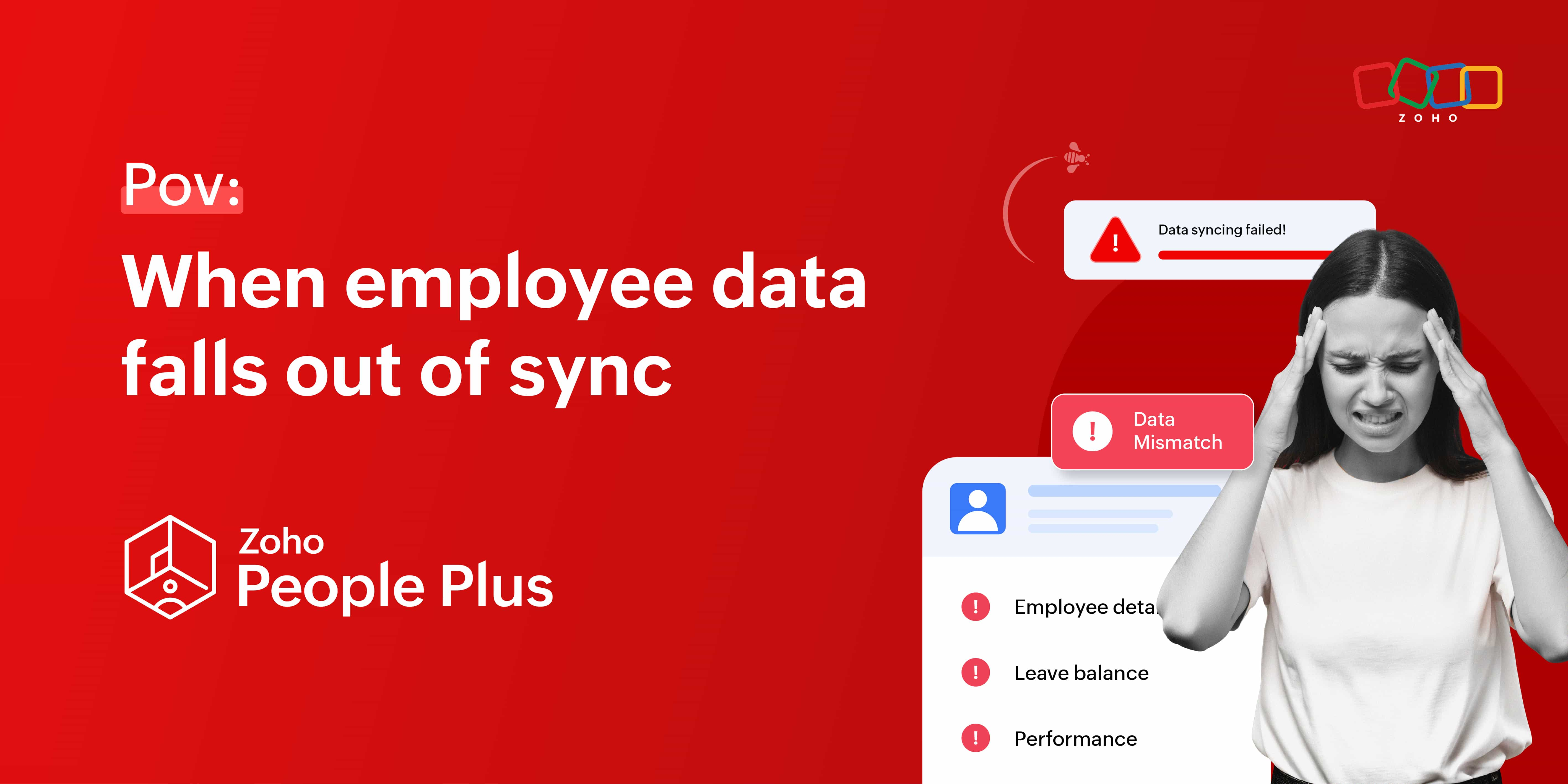
Organizations rely on employee information to make decisions about compensation, access, training, reporting, and day-to-day operations. But when that information is spread across disconnected systems, a change recorded in one place may not reach every team that depends on it. A promotion, for instance, can affect more than an employee's designation. Payroll needs to review compensation details, IT needs to adjust access, L&D needs to revisit training plans, and Finance needs to update cost center allocations. The change happens once, but keeping every record aligned can involve several separate steps.
When one promotion becomes a chain of updates
Consider Priya, an employee who has just been promoted to Senior Associate. Along with her new designation, she has a new manager, additional responsibilities, and a move to a different team. HR records the promotion and updates her employee profile. That part is straightforward. The trouble begins when the other departments need to act on the change.
Each department has its own process for handling these changes. Someone might send an email, raise a ticket, update a spreadsheet, or contact the relevant team directly. All of these methods can work; the difficulty comes from having to repeat them hundreds or thousands of times.
But what happens when one of those steps is missed? Here's what that looks like, team by team.
When every department has its own version of the workforce
Payroll
Payroll depends on accurate employee information to process compensation and other related activities. When an employee is promoted, transferred, or given a revised compensation package, this team needs the relevant details, including the applicable changes and their effective dates.
Suppose Priya's promotion includes a salary revision effective from the beginning of the month. HR has recorded the change, but the payroll team hasn't received the required information. If payroll processes her salary using an outdated record, the discrepancy needs to be identified and corrected.
In organizations with large workforces, reconciling these differences can take considerable time. Payroll teams have to compare records, follow up with HR, verify effective dates, and confirm which changes should be reflected in a particular pay cycle.
IT
Employee changes can also affect access to applications, devices, and internal resources. Someone moving into a new role may need additional permissions, while a transfer could make some existing permissions unnecessary.
For Priya, her promotion and team move require IT to review the applications she can access. If that information reaches IT through a separate request, the update depends on the request being raised, reviewed, and completed.
Until then, Priya doesn't have access to a tool required for her new responsibilities. She also retains permissions associated with her previous role until those permissions are reviewed.
Learning and development
Learning and development teams use employee information to help plan training, identify skill gaps, and organize learning opportunities. An employee's role, department, existing skills, and development goals all influence the training that is relevant to them.
After Priya's promotion, her learning needs change. She needs training related to her expanded responsibilities and a development plan suited to her new position. But since the L&D team is working with outdated role information, she remains assigned to a program intended for her previous role.
This is why keeping employee information current matters beyond routine administration. It can also influence how well learning opportunities align with an employee's changing responsibilities.
Finance
Finance has its own reasons to track employee movements. Depending on the organization's accounting practices, employees may be associated with particular departments, projects, teams, or cost centers. When someone changes teams, the relevant allocations need to be reviewed.
If Priya moves to a different department but Finance continues to associate her with her previous cost center, internal reports won't reflect the change accurately. Someone then needs to investigate the discrepancy and determine when the new allocation should take effect.
The reporting problem nobody notices until they need an answer
The consequences of inconsistent employee data become particularly visible when someone needs a reliable answer about the workforce.
Say Priya's manager is preparing a monthly workforce report. HR lists her as a Senior Associate in her new team, while another record still associates her with her former designation and department. Depending on the report's purpose, this could affect headcount summaries, departmental comparisons, or decisions about staffing and training needs.
For one employee, it's a simple fix. But this becomes much harder to manage when the organization has hundreds or thousands of employees, each with changes to roles, reporting relationships, locations, compensation, or employment status.
What changes with a single source of employee data?
A single source of employee data gives an organization a common reference point for maintaining employee information instead of relying on multiple, independently maintained versions of the same record.
Returning to Priya's promotion, HR can maintain her updated designation, reporting relationship, and other relevant employee details in the central record. Where connected systems and supported workflows allow it, the relevant information can then be made available to every team that needs it.
This reduces the need to re-enter the same information in several places. It can also make it easier to identify which processes depend on an employee change and which teams need to take action.
Platforms like Zoho People Plus are designed to address this problem. Departments access the same records from a central database, without re-entering or cross-checking information across systems.
Wrapping up
The underlying challenge is consistency. HR may have recorded the latest employee movement, but other teams still need the information required for their own processes. If those updates happen separately, the organization has more opportunities for discrepancies and additional work to resolve them.
A more connected approach reduces duplicate updates and gives teams a more consistent view of the workforce. The aim is not to eliminate every manual step, but to make employee information easier to maintain and use across the organization.