How review response time impacts trust and rankings in 2026
- Last Updated : March 25, 2026
- 41 Views
- 3 Min Read

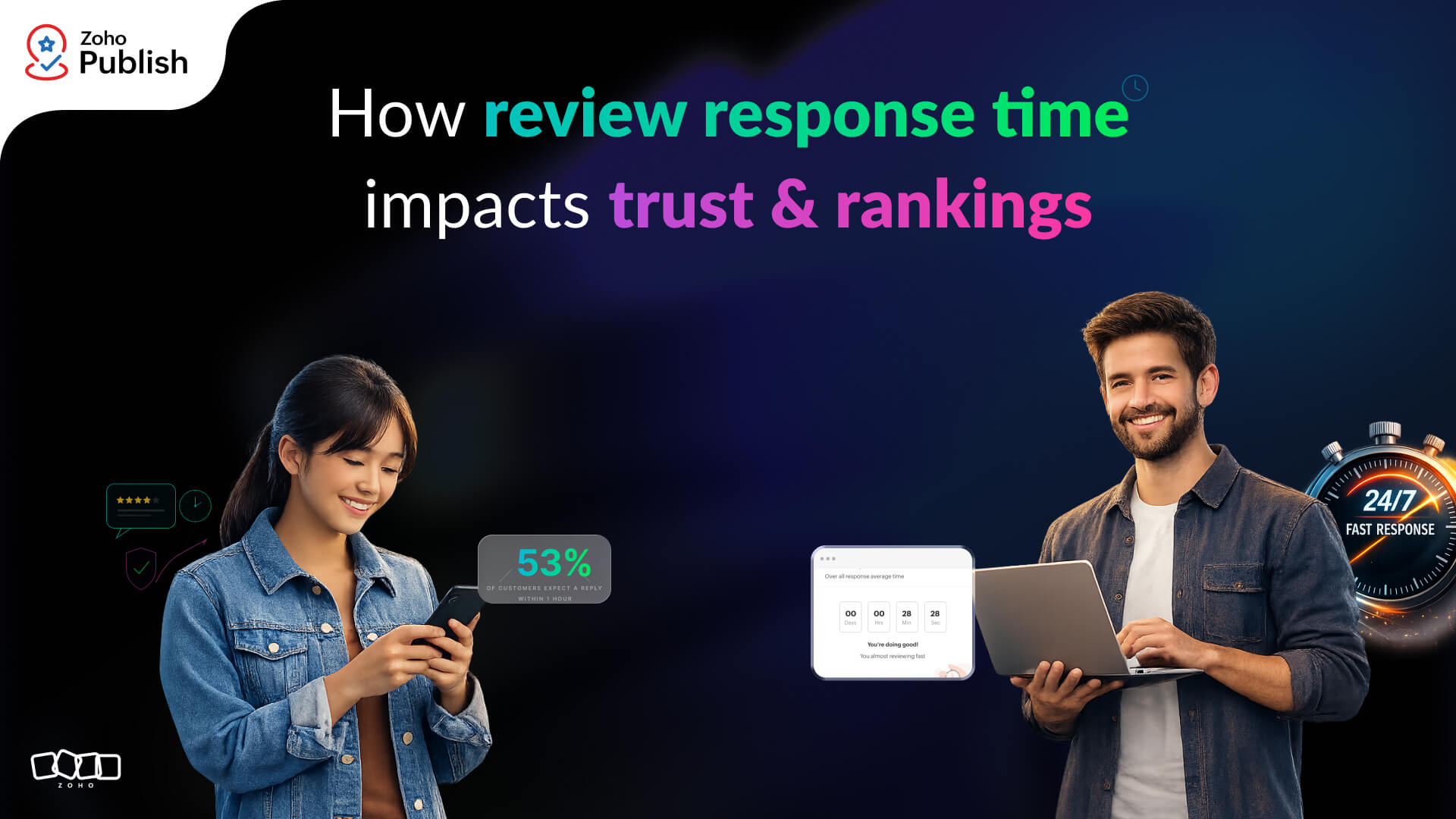
Speed isn’t impressive anymore. It’s expected.
You book a cab, and it arrives before you finish tying your shoes. You order groceries during a lunch break, and they’re at your door by dinner. Waiting feels unnecessary now; almost rude.
That expectation has reshaped how people judge businesses online, especially when it comes to reviews.
Reviews aren’t just feedback anymore
Today, reviews are a public, ongoing conversation between businesses and their audiences. When someone leaves a review, they’re not just sharing an opinion; they’re opening a dialogue, which is exactly why review management has become a core part of how businesses build trust and respond at scale.
Two perspectives that matter: People and search engines
Review response time matters for two very different reasons.
From a people perspective, reviews are emotional. Customers skim quickly and look for signals. Fast responses suggest attentiveness, professionalism, and care. Even before reading the words, speed creates trust.
From a search engine perspective, reviews are behavioral data. Platforms like Google pay attention to review activity, freshness, and engagement. Businesses that respond consistently signal relevance and reliability.
Google itself encourages businesses to respond to reviews to build trust and improve local visibility. (Read Google’s official guidance on managing customer reviews.)
Why speed builds trust
When a business responds quickly, it communicates three things:
Reliability: Customers believe the brand is active and present.
Professionalism: Speed suggests organization and care.
Transparency: Immediate acknowledgment shows there’s nothing to hide.
Even if the issue isn’t resolved yet, being seen matters.
Positive reviews deserve speed, too
When customers leave positive reviews, they’re investing effort and goodwill. A quick thank-you reinforces that effort and strengthens the emotional connection.
Recognition matters. It encourages repeat purchases and increases the likelihood of future reviews. When people see that appreciation gets attention, they’re more willing to speak up again.
Negative reviews can build trust
Negative reviews feel uncomfortable, but with the right approach, they can strengthen trust and loyalty—especially when you know the right ways to respond to negative reviews.
Speed as a competitive advantage
Businesses don’t need to respond in minutes, but they do need consistency.
A solid benchmark looks like this:
Respond to reviews within 12 to 24 hours
Avoid leaving any review unanswered beyond 48 hours
The key is acknowledgment. Customers want to know their voice was heard. Even if a full resolution takes time, a prompt response keeps trust intact.
Industry-specific considerations for review response time
Different industries come with different emotional expectations.
Healthcare relies on empathy and personalization. Speed matters, but tone matters more. Manual responses for negative reviews often work best here.
Retail and e-commerce benefit from fast, consistent replies. Automation helps, but human oversight keeps responses authentic.
Hospitality is highly visible. Review responses influence booking decisions directly, so faster replies often lead to higher conversions.
Professional services require credibility and clarity. A quick acknowledgment followed by thoughtful replies builds confidence.
Multi-location businesses need consistency at scale. Standard processes paired with local context work best.
For teams responsible for customer experience and reputation
Review response time influences brand perception, local rankings, conversion decisions, and long-term loyalty. You can spend heavily on ads, but unanswered reviews undo that effort. Speed builds trust before your messaging ever does.
AI, automation, and the human touch
Fast responses work best when paired with empathy.
AI and automation help keep tabs on reviews and draft initial responses. Auto-review responses keep teams fast and consistent without sacrificing oversight or tone, and humans add context, empathy, and brand voice.
The winning model for responding to reviews is AI-assisted, human-refined responses: fast enough to meet expectations, and personal enough to feel real.
Final thoughts
You can’t control what people say about your business, but you can control how you respond, so respond fast and thoughtfully.
People notice.
Search engines do, too.